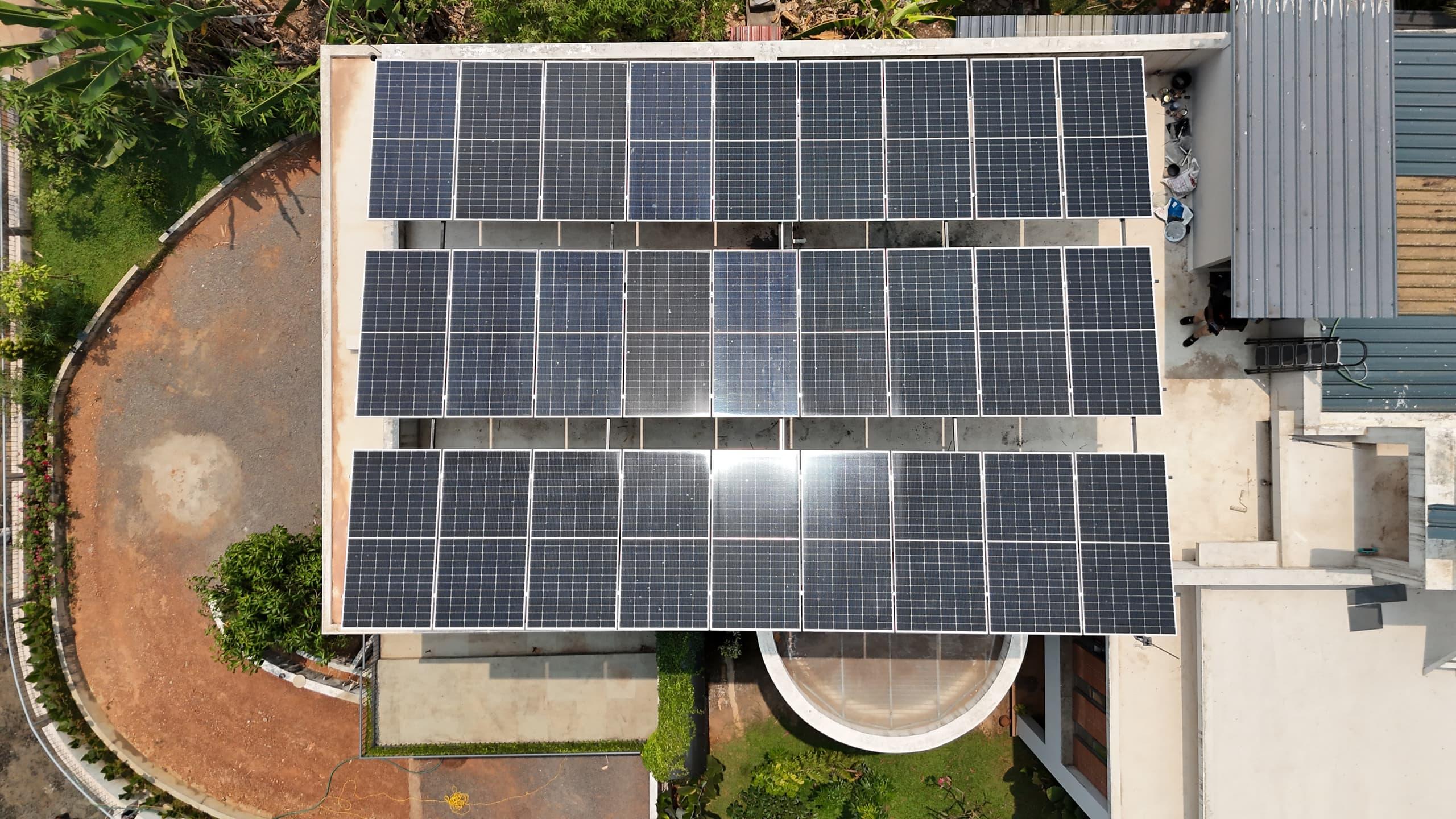


At Ramanattukara in Kozhikode, our team went back to a hybrid system we installed three years earlier, for its scheduled service. We filmed the visit, because it shows what a service visit is for. The panels were cleaned, but that was the smallest part of the job. Most of what can go wrong with a solar system is not dust.
1. Readings at the distribution boxes
The visit starts at the DC and AC distribution boxes, checking the system's parameters against what they should be. A string reading low, a voltage out of range or a tripped device tells the technician where to look before anything is opened.
2. The generation record
The inverter keeps the system's history: total units generated and the data for each year. Comparing one year with the last, month by month, shows a slow decline that no one would notice from the bill.
3. Batteries
This system was built on lead-acid batteries; today we design hybrids around lithium. Either way, the battery parameters are checked, terminals cleaned and tightened, and the dust that settles on batteries cleaned off. Batteries get attention in the first months and are then forgotten, which is exactly when they start to fail.
4. Surge protection, cables and earthing
Surge protection devices are what stand between a lightning-induced surge and your inverter, and they do not announce when they have done their job and failed. Each is checked, along with the cables for damage and the earth resistance against its specification. These are the checks that prevent the expensive failures.
5. Structure and corrosion
On this site, the panel stands were showing early corrosion at the edges. It was treated on the spot, and every connection point on the system was re-tightened. In Kerala's humidity, and more so near the coast, corrosion caught in year three is a small job; caught in year eight, it is a new structure.
6. Shade that was not there before
A tree next to this house had grown since the installation, and its shade had started to fall on the panels. That is not something a technician can fix, but it is something the owner needs to know, so we reported it to them. A system designed shade-free on day one does not stay that way on its own.
7. Then the panels
Last, the panels are cleaned the safe way: soft water and a soft brush or microfibre, never a pressure washer, abrasive powders or metal tools, and never by standing on them. Clean panels matter, but they matter most on a system whose wiring, protection and structure are sound.
Your roof, next
Want these numbers for your own house?
A free one-hour roof survey by a SEDNA engineer. Honest size, subsidy filed, quote in writing.
- 4.9 on Google
- 2,500+ installations
- MNRE-approved
- Since 2009