
Every question we get asked about rooftop solar, answered plainly.
Sizing, roofs, the monsoon, on-grid versus hybrid, what KSEB does, how the subsidy works, batteries, warranties and what happens after installation. Written for Kerala, with the numbers that apply here rather than national averages.
Last reviewed · each answer says where it comes from
- Government-verifiedChecked against MNRE, the PM Surya Ghar portal, KSEB or KSERC.
- General solar guidanceStandard solar engineering, with Kerala figures where they differ.
- SEDNA practiceHow SEDNA actually works, confirmed by the team.
- SEDNA practice · being confirmedSEDNA practice as we understand it; exact terms being confirmed.
The physical installation of a home system takes 2 to 3 days. End to end, from survey to net-metered commissioning, typically runs four to eight weeks, mostly consumed by KSEB approvals and meter availability rather than construction. We chase every stage so you don't have to.
General solar guidance
Each panel is a sheet of photovoltaic cells. Light knocks electrons loose in the silicon and that flow is direct current. An inverter turns it into the alternating current your house runs on. On a grid-connected system, whatever your home is not using at that moment flows out through the meter to KSEB, and at night you draw back from the grid as normal.
General solar guidance
Modern modules are rated for 25 years of performance, and most keep producing well beyond that at reduced output. Manufacturers state the decline: typically about 2 percent in year one, then roughly half a percent a year, so a panel is still around 80 to 85 percent of its original output at year 25. The inverter is the part that does not last that long; expect to replace it once in the system's life.
General solar guidance
In coastal Kerala, plan on roughly 3.3 to 4 units a day per kilowatt averaged across the year, which is about 1,200 to 1,440 units a year per kW. That figure already includes the monsoon. A well-placed 3 kW system therefore produces about 300 to 360 units a month on average; more from February to April, less in June and July.
General solar guidance
Usually yes from about ₹1,500 a month upward, because KSEB's slab tariff means the units you stop buying are the expensive ones at the top of your bill. Below that, the fixed costs of a system (inverter, structure, metering) weigh more heavily and payback stretches. The calculator on our homepage gives an indicative answer for your own bill.
General solar guidance
Start from your units, not your rupees. Divide your average monthly units by about 110 (a fair Kerala yield per kW per month) to get a kilowatt figure. A home using 330 units a month lands near 3 kW. Then check the roof can hold it, and check your KSEB sanctioned load, because net metering capacity is tied to it. The final size comes from a site survey, not a formula.
General solar guidance
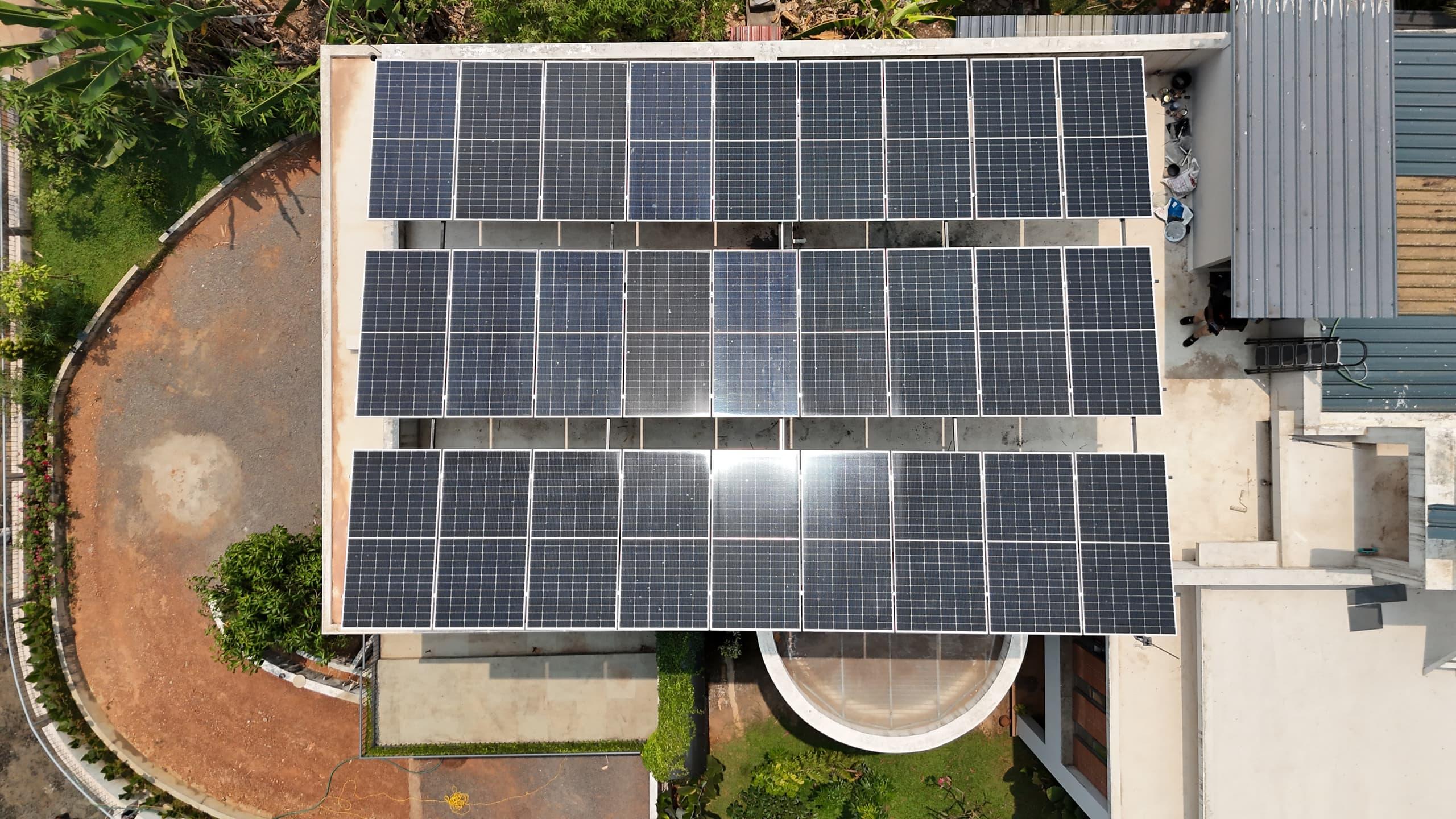
About 80 to 100 square feet of shade-free roof per kilowatt with today's 500 W-class modules, so a 3 kW system needs roughly 250 to 300 square feet. Sloped roofs use the south-facing side; flat roofs use tilted structures with walkways between rows. Water tanks, parapets and neighbouring trees are what usually eat into usable area.
General solar guidance
Divide the system size by the panel wattage. SEDNA now installs 600 W-series modules, so 3 kW is 5 panels and 5 kW is 8 to 9. With the 390 W modules common a few years ago, the same 3 kW needed 8. Panel count on its own tells you nothing about capacity, so always compare quotes on kilowatts and the exact module model, not on how many panels are listed.
SEDNA practice
Concrete (RCC) flat and sloped roofs, Mangalore tile, and GI or aluminium sheet roofs are all installed on routinely in Kerala; each needs its own mounting method. Asbestos sheet is avoided. What matters is that the structure can carry the panels and the mounting, and that the fixing does not compromise waterproofing. A survey checks both before anything is quoted.
General solar guidance
Physically, yes, if the roof has space. The constraints are the inverter's rated capacity and your KSEB sanctioned load and net-metering approval, which are for a specific capacity. Adding kilowatts means a revised application. If you expect your load to grow (an EV, air conditioning), say so at survey stage so the inverter and structure are sized with headroom.
General solar guidance
Yes, at reduced output. Panels generate from diffuse light, so a heavy overcast day might give a third of a clear day, and generation never drops to zero in daylight. The annual yield figures quoted for Kerala already average in June and July. Net metering is what makes this painless: surplus from the bright months is banked and offsets the monsoon shortfall.
General solar guidance
It can, if the wrong materials are used. Coastal installations need hot-dip galvanised or anodised aluminium structures, stainless fasteners and sealed junction boxes; panels themselves are glass and anodised aluminium and cope well. Ask any installer working within a few kilometres of the sea what structure and fastener grade they use, and get it in the quotation.
General solar guidance
Every grid-connected system should have proper earthing and surge protection on both the DC and AC sides, and a lightning arrester where the roof is the highest point around. Structures are designed for wind loading; in Kerala that means engineered rail systems rather than improvised angle-iron frames. These are the items most often skimped on in a cheap quote.
General solar guidance
A little. Output falls slightly as cell temperature rises above the 25 °C test standard, so an April afternoon at 60 °C cell temperature gives a few percent less than the nameplate. Airflow under the panels helps, which is one reason a tilted structure on a flat roof outperforms panels laid flat against it.
General solar guidance
On-grid uses KSEB as the battery: you export surplus by day, import at night, and settle the difference through net metering. It is the cheapest and the one the PM Surya Ghar subsidy is built for. Off-grid stores everything in batteries and has no KSEB connection; it suits places with no grid. Hybrid is on-grid plus a battery bank, so you keep power during outages and still export surplus.
General solar guidance
No, and this surprises people. When KSEB's supply drops, an on-grid inverter shuts down within milliseconds so it cannot push power into lines that linemen may be working on. That is a mandatory safety feature, not a fault. If you need power during outages, you need a hybrid system with batteries, or a separate backup.
General solar guidance
Go hybrid if outages genuinely cost you something: a home office, medical equipment, a small business. The battery adds materially to the cost and is the one component with a shorter life, so for a house that simply wants a lower bill, on-grid usually wins. Kerala's 2026 net-metering rules kept on-grid attractive for homes up to 20 kW, so the case for hybrid is about backup, not billing.
General solar guidance
Technically yes, but rarely sensibly where KSEB supply exists. To cover the monsoon you would need to oversize both panels and batteries for the worst weeks, and you give up the ability to export surplus. Off-grid is the right answer for remote plots, farms and sites where a connection is impractical.
General solar guidance
It converts the panels' DC to AC, matches it to the grid, and shuts down safely when the grid fails. It is the working heart of the system and the component most likely to need attention in the system's life, so brand, local service network and warranty matter more here than anywhere else. Ask for the exact model, its rated capacity and its warranty in writing.
General solar guidance
A string inverter handles the whole array and is the standard, economical choice for an unshaded Kerala roof. Micro-inverters sit under each panel so shade on one does not drag down the rest, useful for complex roofs with partial shading, at a higher cost. For most homes here, a string inverter with a clean, unshaded layout is the right call.
General solar guidance
Lithium (LiFePO4) costs more upfront but lasts far longer, tolerates deeper discharge, needs no maintenance and takes less space, which is why it has become the default for new hybrid systems. Lead-acid is cheaper to buy and still reasonable for small backup, but expect to replace it several times over the life of the panels.
General solar guidance
Size it to what you actually want to run during an outage and for how long, not to the whole house. Lights, fans, Wi-Fi, a fridge and phone charging for a few hours is a modest battery; adding an air conditioner changes the picture entirely. A survey lists the loads and gives you the trade-off between battery size and cost.
General solar guidance
A bidirectional meter records both the units you draw from KSEB and the units your roof exports. You are billed on the net difference, so daytime surplus offsets night-time use. Surplus beyond your consumption is banked and carried forward, and what remains at the annual settlement is compensated at the rate the regulator, KSERC, fixes.
Government-verified
KSERC notified the Renewable Energy and Related Matters Regulations, 2025, in force from 6 November 2025 with the new billing arrangements from 1 January 2026. The notified rules allow domestic net metering up to 20 kW and apply grid support charges only above 10 kW. A widely reported draft had proposed a 3 kW cap; that is not what was notified. Confirm the current position for your connection with KSEB before fixing a size.
Government-verified
The regulations provide for the technical feasibility study to be completed within 15 days of a complete online application. In practice it depends on the section office and on whether your paperwork is complete first time. Nothing should be installed before this approval arrives.
Government-verified
KSEB. After installation, a KSEB engineer inspects the plant against the approved application, then the bidirectional meter is fitted and the system is commissioned to the grid. Meter availability at the local section office is the most common source of delay in Kerala, not the inspection itself.
Government-verified
Close to it for a well-sized system, but rarely exactly zero: fixed charges, meter rent and any duty remain, and night-time consumption is offset only to the extent of your banked surplus. A home paying ₹3,000 a month commonly drops to a few hundred rupees. The bill is smallest in the bright months and highest after the monsoon.
General solar guidance
The central PM Surya Ghar assistance is ₹30,000 for 1 kW, ₹60,000 for 2 kW and ₹78,000 for 3 kW and above. ₹78,000 is a ceiling, so a 5 kW or 10 kW system receives the same as a 3 kW system. Kerala does not currently add a state top-up for homes. Our subsidy page walks through eligibility, documents and the process stage by stage.
Government-verified
A residential KSEB consumer with a live domestic connection, a usable shade-free roof, a grid-connected system with net metering, an installer registered on the national portal, ALMM-listed DCR panels, and a bank account in the applicant's name. Commercial and industrial connections are outside the scheme. The subsidy is paid directly to you after commissioning, never to the installer.
Government-verified
No. The application and KSEB's feasibility approval must come before installation, and a system built first can be refused. If an installer suggests starting now and sorting the paperwork afterwards, stop there.
Government-verified
ALMM is the government's Approved List of Models and Manufacturers; DCR (domestic content requirement) means the module's cells and panel are made in India. The residential subsidy requires ALMM-listed DCR modules. Imported or unlisted panels may be perfectly good and still fail the claim, so ask for the exact model and check it on the ALMM list before signing.
Government-verified
No single company is the best choice for every home. Get quotations from two or three installers and compare the panel and inverter brands, the warranties, how the PM Surya Ghar subsidy paperwork is handled, what the installation charge includes, and the service you will get over the next five to ten years. SEDNA Energy Systems has installed rooftop solar from Cherthala since 2009 and holds a 4.9★ rating from 440+ Google reviews. Our free roof survey gives you a written quotation you can compare line by line with anyone else's.
SEDNA practice
എല്ലാ വീടിനും ഒരുപോലെ ഏറ്റവും നല്ലത് എന്ന് ഒരു കമ്പനിയെ പറയാൻ കഴിയില്ല. രണ്ടോ മൂന്നോ കമ്പനികളിൽ നിന്ന് ക്വട്ടേഷൻ വാങ്ങി പാനൽ, ഇൻവെർട്ടർ ബ്രാൻഡ്, വാറന്റി, PM Surya Ghar സബ്സിഡി നടപടികൾ, ഇൻസ്റ്റലേഷൻ ചാർജ്, അടുത്ത 5–10 വർഷത്തെ സർവീസ് എന്നിവ താരതമ്യം ചെയ്യുക. 2009 മുതൽ ചേർത്തലയിൽ പ്രവർത്തിക്കുന്ന SEDNA Energy Systems-ന് 440-ലധികം Google റിവ്യൂകളിൽ നിന്ന് 4.9★ റേറ്റിംഗ് ഉണ്ട്. സൗജന്യ റൂഫ് സർവേയ്ക്ക് ശേഷം ഞങ്ങൾ എഴുതിയ ക്വട്ടേഷൻ നൽകും.
SEDNA practice
We measure the usable roof, run a shadow study through the day, check the structure and how the panels would be fixed and cabled, read your load and sanctioned load from the meter and bill, and look at the earthing. From that you get a system size, a layout and a quotation with the exact module and inverter models named. The survey is free and there is no obligation.
SEDNA practice
Little. Rain does most of the cleaning in Kerala; in the dry months a rinse every few weeks keeps dust and bird droppings from shading cells. Once a year the system should be checked professionally: connections, earthing, inverter logs and generation against expectation. Panels have no moving parts, so the inverter and the wiring are what a check is really about.
General solar guidance
Modules typically carry a 25-year performance warranty and a 10 to 12-year product warranty from the manufacturer; inverters typically 5 to 10 years depending on brand, sometimes extendable. Structures and workmanship are covered by the installer. We are confirming the exact terms for each brand SEDNA installs and will list them here.
SEDNA practice · being confirmed
You call the same number you called on day one. SEDNA's commitment is that no customer is left unattended for more than 24 hours after a service call, in any year of ownership. Annual maintenance contracts covering cleaning and the yearly check are available; the terms are being confirmed and will be published here.
SEDNA practice · being confirmed
Several banks offer solar loans, and the PM Surya Ghar scheme is paired with collateral-free concessional loans for systems up to 3 kW through participating banks; the current rate and terms should be checked with the bank. Whether SEDNA arranges financing directly, and with whom, is being confirmed.
SEDNA practice · being confirmed
Compare on kilowatts and named components, not on panel count or headline price. Line up: module model and wattage, inverter model and rated capacity, structure material, cable and protection specification, warranty terms in writing, and what is excluded (KSEB fees, electrical upgrades, meter). Then treat the subsidy as money that comes back to you, not as a discount on the quote.
General solar guidance
Not under PM Surya Ghar, which is for residential consumers. Commercial and industrial solar is funded differently: the tax route, through accelerated depreciation on the asset, plus the direct saving on a tariff that is usually higher than domestic. The economics can be better than for a home, just through a different mechanism.
Government-verified
Yes. Under the KSERC 2025 regulations, net metering is available to commercial and industrial consumers up to 500 kW, with net billing and gross metering as alternatives, and grid support charges above 10 kW. Because businesses consume most of their power in daylight, self-consumption is high and the export question matters less than it does for a home.
General solar guidance
The same arithmetic as a home, but the load profile changes the answer. A shop or office that runs in daylight can size close to its full daytime consumption and use almost everything on site. A factory with night shifts sizes to the daytime portion. The survey reads your interval consumption, not just the monthly total.
General solar guidance
SEDNA has installed on-grid, off-grid and hybrid systems for homes, businesses and institutions since 2009. We are documenting our commercial installations with the same detail as our residential records and will publish them as case studies.
SEDNA practice · being confirmed
Your question is not here?
Ask it on WhatsApp and we will answer it, and probably add it to this page.