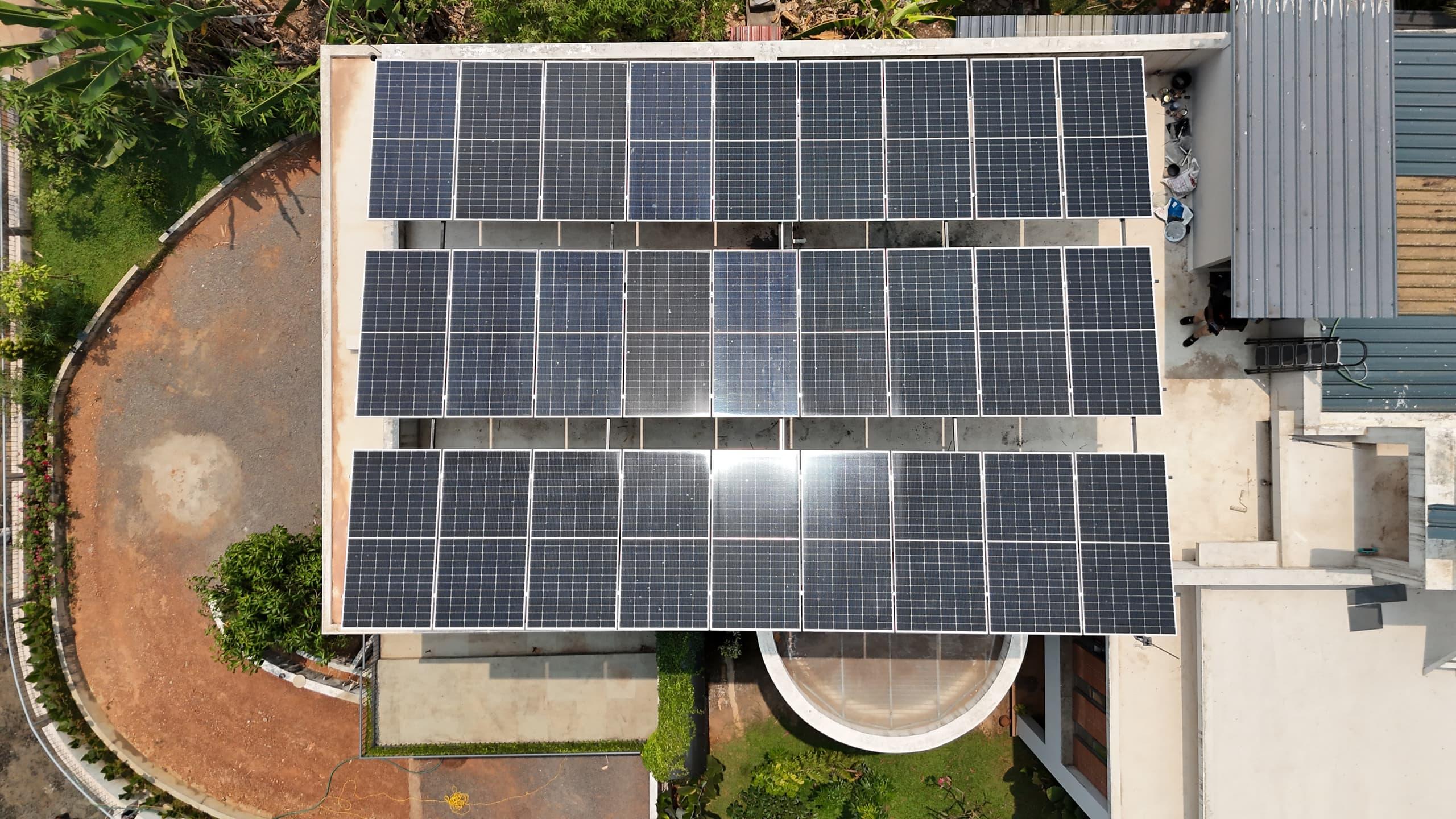



Solar is becoming a practical source of electricity for Kerala homes. Rising consumption and growing awareness of renewable energy have led many families to consider a rooftop solar plant of their own.
In 2026, eligible households can benefit from PM Surya Ghar: Muft Bijli Yojana, the central government's rooftop solar scheme. The subsidy is paid as Central Financial Assistance (CFA) under the scheme's guidelines. For consumers in Kerala, applying and connecting the plant to the grid also involves KSEB, which handles feasibility, inspection and the net meter through its own online rooftop solar services.
This article covers what to consider, who is eligible, how much the subsidy is, and the overall process of applying for a rooftop solar plant in Kerala.
What is the PM Surya Ghar solar subsidy?
PM Surya Ghar: Muft Bijli Yojana is a Government of India programme that supports rooftop solar for residential consumers. The central assistance works in slabs: ₹30,000 per kW for the first 2 kW, ₹18,000 for the third kW, and no additional central assistance above 3 kW.
So a household installing a 3 kW system may be eligible for the maximum central subsidy under the standard residential structure, provided every condition of the scheme is met. The final amount always depends on the official rules, benchmark costs and eligibility in force when you apply.
How much subsidy can you get?
The subsidy depends on the capacity of the plant and the guidelines in force at the time. It is highest for the first kilowatts and stops growing at 3 kW. In practice that means ₹30,000 for a 1 kW system, ₹60,000 for 2 kW, and ₹78,000 for 3 kW and above. A 5 kW or 10 kW home system receives the same ₹78,000 as a 3 kW one.
Subsidy rules, procedures, technical requirements and allocations can change. Check the current position on the official PM Surya Ghar portal and with KSEB before you make a financial decision. Our subsidy guide is reviewed every month and shows the slabs, the balance you actually pay, and why the ceiling matters when you size a system.
Who is eligible?
Before applying, confirm that your property and electricity connection meet the requirements. The rooftop solar subsidy is meant for eligible residential electricity consumers. In practice: the connection must be in the eligible residential (domestic) category; the system must meet the scheme's technical requirements, including India-made DCR panels from the approved list; the installation must follow the proper procedure through a registered vendor; your consumer and bank details must be submitted correctly; and the inspection and metering requirements of KSEB, your distribution company, must be completed.
Commercial connections, off-grid systems and connections that have already received the subsidy are outside the residential scheme. Businesses can still go solar; the arithmetic simply runs through a different route.
How to apply for solar subsidy in Kerala
The application moves through several stages. Following each one correctly is the best way to avoid delays.
Step 1, registration on the national portal. The process starts on the official PM Surya Ghar portal, where you register with your electricity connection details and your own. Keep the login; it lets you check the status at every stage.
Step 2, choosing a suitable vendor. After registering, you choose a registered vendor to install the system. Compare installation quality, product specifications, warranty, after-sales service and experience, not just the quotation. A search for a solar company in Alappuzha will show many options; comparing their system specifications, documentation and service record is what separates them.
Step 3, choosing the system capacity. Base it on your monthly electricity usage, the shade-free roof space available, the roof's orientation and shading, the capacity of your electricity connection, and your budget and future needs.
Step 4, installation. After approval, the vendor installs the system: solar panels, mounting structure, inverter, DC and AC protection, earthing and safety devices, cabling, and monitoring where required. The exact setup depends on the system design.
Step 5, inspection and metering. After installation, KSEB inspects the plant and completes the grid connection. For grid-connected systems the net meter and the other technical requirements must be in place before the system is fully commissioned.
Step 6, subsidy processing. Once installation, verification and document submission are complete, the subsidy is processed under the PM Surya Ghar guidelines and paid into the applicant's own bank account. Make sure your bank and consumer details are correct, because a mismatch is one of the most common causes of delay.
What to consider before installation
A solar system is an investment that deserves more thought than the subsidy alone.
Monthly electricity usage: look at your past bills and work out your average monthly consumption. It is the best starting point for the capacity you need. Available roof area: panels need shade-free space, and neighbouring buildings, trees and water tanks all affect generation. Orientation and shading: a proper site survey finds shading that is easy to miss from the ground.
Panels and inverters: know the technical specifications and warranties of the equipment you are offered, with exact model names in the quotation. Installation quality: even the best equipment underperforms if mounting, wiring, earthing, protection and waterproofing are done badly. After-sales service: a solar system runs for decades, so check whether the company will still be there to maintain it. Warranty conditions: understand what the panel, inverter and other component warranties actually cover.
Subsidy, solar and your electricity bill
A rooftop system saves money by reducing the electricity you buy from the grid. How much it saves depends on the size of the system, your household consumption, how much the roof generates, the condition of the roof, your tariff, the season, how well the system is maintained, and the grid and billing arrangements that apply to you.
That is why savings should always be calculated from your own electricity bills, not from a general figure. Our estimate on the homepage gives a first number in ten seconds; the free roof survey gives the real one.
Mistakes to avoid
Choosing the cheapest company without checking. The lowest quote may not include everything you need. Check exactly what the package contains.
Not checking your electricity bills. You need to know your current consumption to choose the right capacity.
Overlooking roof shading. Shade on even a small part of the roof can reduce generation. Insist on a site assessment.
Assuming every solar system qualifies for the subsidy. Each scheme has conditions. Make sure the system and the installation process meet them.
Ignoring the details in the quotation. Installation, transport, protection devices, documentation, metering work and other charges should all be included in the price.
Neglecting after-sales service. Solar is a long-term investment, and service is sometimes needed, especially for the inverter and monitoring.
Common questions about the subsidy
How much is the solar subsidy in Kerala in 2026? Eligible residential consumers receive central assistance under PM Surya Ghar, up to a maximum of ₹78,000 for systems of 3 kW and above, subject to the scheme's rules and conditions.
Is the subsidy only for residential consumers? Yes. The PM Surya Ghar rooftop subsidy is for eligible residential consumers. Check the eligibility criteria on the official portal.
Can I apply for the subsidy myself? Yes. The application is made online on the PM Surya Ghar national portal, and the grid connection is handled by KSEB. A good installer helps with every submission, but the application stays in your name.
How long does the subsidy take? It depends on the application, installation, inspection, metering and document verification. The official benchmark is transfer within 30 days of the commissioning report being uploaded.
Can I install solar without the subsidy? Yes. You are free to install rooftop solar without the subsidy under the applicable rules.
How do I work out the capacity I need? Start from your past consumption, your roof size and your future needs. A site assessment confirms the right capacity.
Does solar work in cloudy weather? Yes. Panels generate on cloudy days too, though less than in full sun. The annual figures we quote already include the monsoon.
Conclusion
The subsidy makes rooftop solar affordable for more Kerala homeowners by covering part of the cost, but it is only one part of the decision. Know your consumption, have your roof assessed, choose the right equipment, and make sure every current government requirement is met. Just as important is an installer who gets the installation, the documentation and the after-sales service right.
Wherever you are in Kerala, in Alappuzha, Kochi or elsewhere, comparing the whole package rather than the headline price is how you make the right solar investment.
Subsidy amounts, eligibility criteria and application procedures are subject to change. Always confirm the current details on the PM Surya Ghar portal and with KSEB before you apply or pay for a system.
Your roof, next
Want these numbers for your own house?
A free one-hour roof survey by a SEDNA engineer. Honest size, subsidy filed, quote in writing.
- 4.9 on Google
- 2,500+ installations
- MNRE-approved
- Since 2009