

Under net metering, the units your roof exports beyond what you use are banked with KSEB and set against what you draw later. For most homes that balances out over the year. But some roofs are big and some households are small, and some owners also run a shop, a clinic or an office on a separate KSEB connection that pays a higher tariff. For them the question is obvious: can the surplus from home pay for the electricity at work?
What wheeling means
Wheeling is moving the energy your plant generates across KSEB's network to be counted at a different connection. In practice, for a rooftop owner, it means KSEB adjusts the surplus from the connection where the plant is against the consumption of another connection, rather than paying you for it at the end of the settlement year.
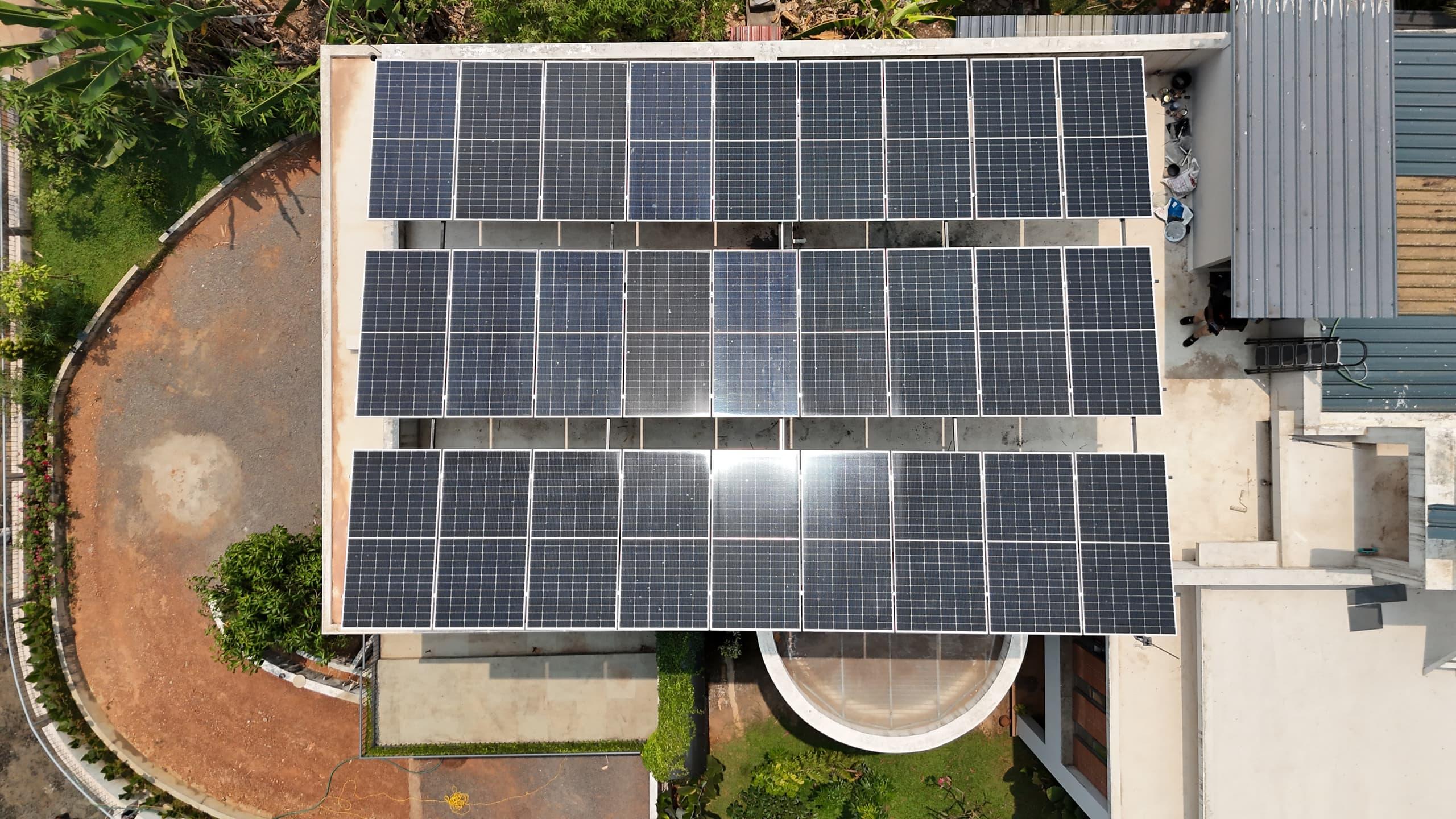
One of our customers did exactly this. Binoy's first system, a 5 kW hybrid in Ernakulam, has averaged above 20 units a day for three years, and its surplus was wheeled to a second connection in his own name.
When it makes sense
Wheeling helps when the other connection pays more per unit than the surplus would earn at settlement, which is often true of commercial connections, and when your roof reliably makes more than your home uses. It does not help a home that uses everything it generates.
What to check before you plan around it
The connections normally need to be in the same name and with the same distribution licensee. The arrangement needs KSEB's approval, and the rules allow charges for using the network. The details are set by the Kerala State Electricity Regulatory Commission and have changed with each set of regulations, so the current position matters more than anything you read about it a year ago.
That is why we check it case by case, at the design stage: whether your two connections qualify, what charges apply now, and whether a larger system at home, or a separate system at the other premises, gives the better result.
How to ask KSEB for it
Wheeling to another premises of your own is provided for in the KSERC 2020 regulations. The request is a letter to the Assistant Engineer of your KSEB section office, for a grid-connected system that already has its net-metering agreement, with the KSEB bills of both premises and an address proof attached. Our circulars page has a ready template you can fill in with your section office, name, phone and system size.
Your roof, next
Want these numbers for your own house?
A free one-hour roof survey by a SEDNA engineer. Honest size, subsidy filed, quote in writing.
- 4.9 on Google
- 2,500+ installations
- MNRE-approved
- Since 2009