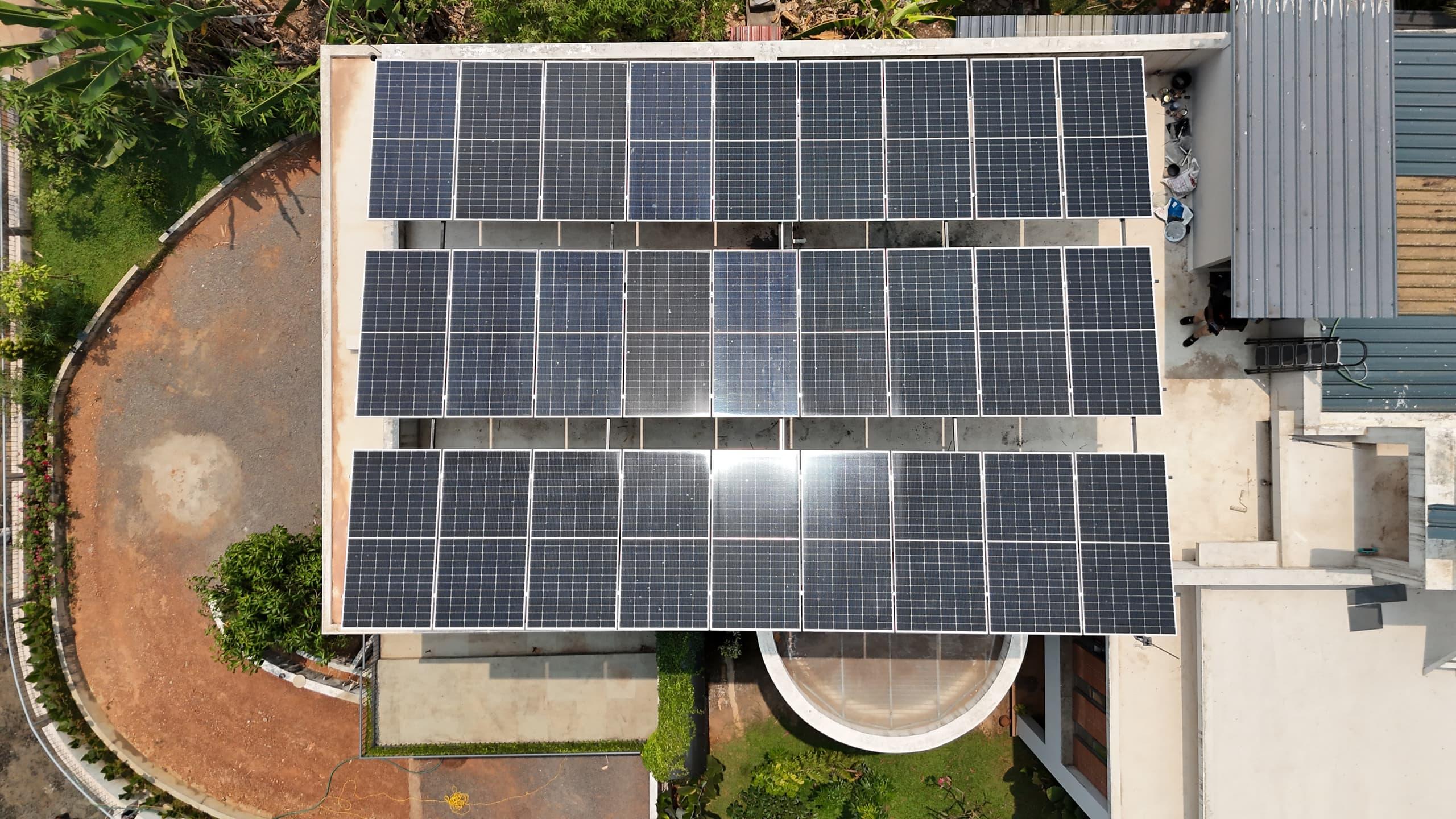


Kerala is buying electric cars faster than almost any state, and every one of them quietly converts a petrol bill into an electricity bill. That is already a good trade. Pairing the car with rooftop solar makes it a spectacular one, and we increasingly size systems with the car as a first-class load. The EV coverage on our SOLARKART channel exists because the two technologies belong together.
What a car actually consumes
A typical family EV consumes 12 to 16 units per 100 km. Drive 1,000 km a month and the car wants roughly 130 to 160 units, which at upper domestic slab rates is a meaningful bill, and still several times cheaper than petrol for the same distance. In solar terms, those monthly units are the output of roughly 1 to 1.5 kW of additional array. That is the sizing rule of thumb: one extra kilowatt of panels per 700 to 800 km of monthly driving.
Charging patterns that make solar work harder
Solar charges the car directly only when the car is home in daylight, which suits households with a second vehicle, home offices or weekend-heavy driving. For daily commuters the grid and net metering bridge the timing: your panels export by day, the car imports by night, and the bimonthly netting makes the roof pay for the driving anyway. Where outage backup already justifies a hybrid battery, the same battery can shoulder evening charging, though sizing batteries specifically to charge cars rarely pays yet.
Planning the installation for a car you have not bought
If an EV is anywhere in your five-year plan, say so at survey time. It changes three cheap decisions: array headroom or an upgrade-ready structure, a cable route and breaker provision from the distribution board to the parking spot, and porch-mounted panels where the car parks, which our solar car porch guide covers in detail. Provisioning at build time costs a fraction of retrofitting, and it is exactly the kind of forward sizing an honest survey should raise with you, not the other way around.
Your roof, next
Want these numbers for your own house?
A free one-hour roof survey by a SEDNA engineer. Honest size, subsidy filed, quote in writing.
- 4.9 on Google
- 2,500+ installations
- MNRE-approved
- Since 2009