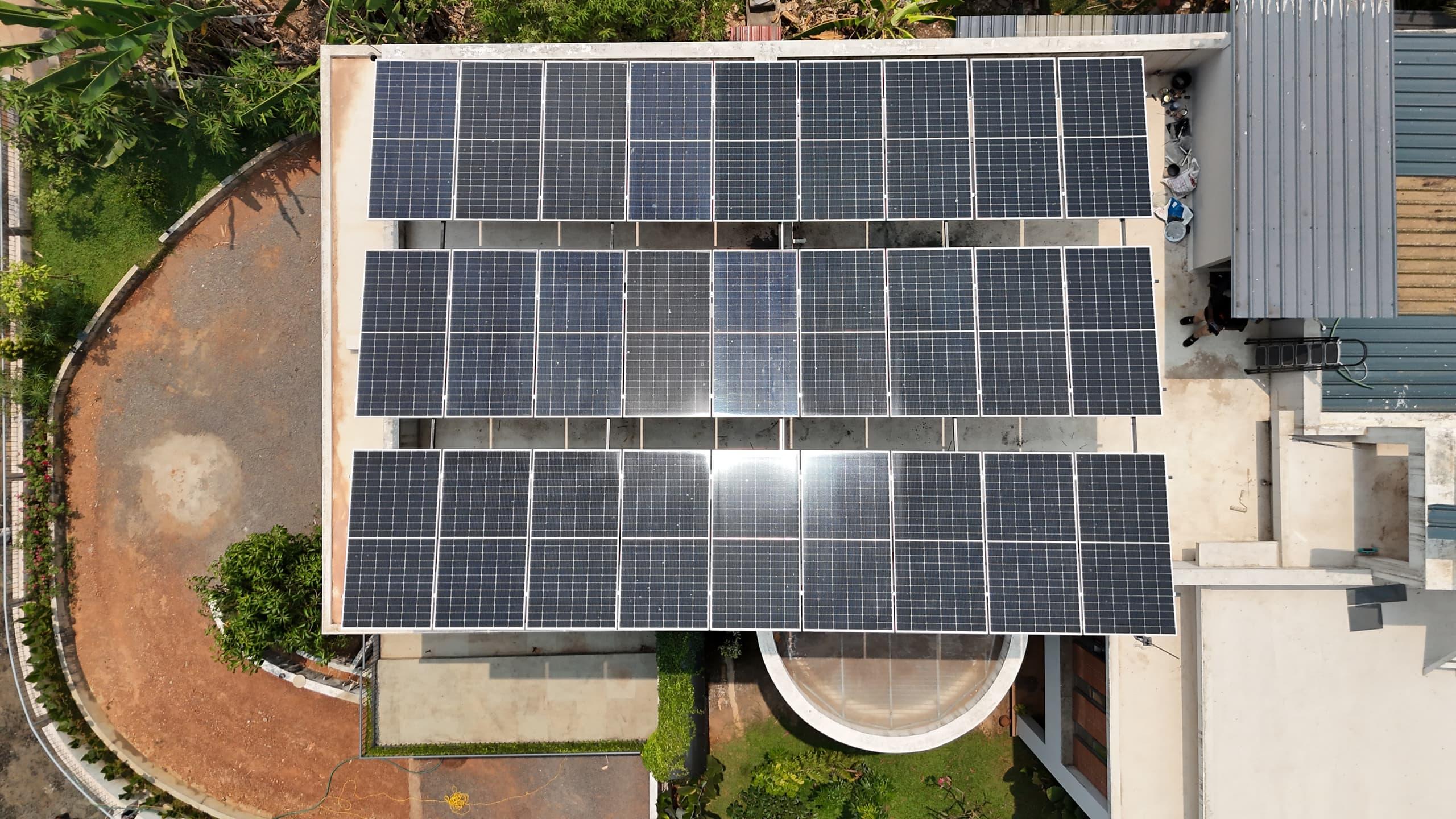


Solar systems are sized for the household you are, not the household you become. Air conditioners arrive, an EV enters the porch, a floor gets added, and the 5 kW that once zeroed your bill starts falling behind. The video shows exactly this: a 5 kW system upgraded to 15 kW. Here is what an upgrade involves.
What gets reused, what gets replaced
Panels usually stay and new ones join them, though large upgrades sometimes re-lay the array entirely for a cleaner layout, as this one did. The inverter is the decision point: a 5 kW inverter cannot serve 15 kW, so upgrades either replace it or add a second unit. Structure gets extended or rebuilt to the new footprint, and the earthing and protection systems are re-verified for the higher capacity.
The paperwork nobody mentions
Your net metering agreement with KSEB is for a sanctioned capacity. An upgrade means revised approvals and inspection, and possibly service connection changes depending on the jump. We handle this file the same way we handle the original subsidy paperwork: it goes in with the project, not after it.
Building upgradeability in from day one
If your consumption is likely to grow, say so at the first survey. Structures can be built with spare rows, cable runs sized a step up, and inverter choices made with headroom or parallel expansion in mind. Designing for the household you are becoming costs a little more steel today and saves a rebuild tomorrow.
Your roof, next
Want these numbers for your own house?
A free one-hour roof survey by a SEDNA engineer. Honest size, subsidy filed, quote in writing.
- 4.9 on Google
- 2,500+ installations
- MNRE-approved
- Since 2009