

We have surveyed thousands of Kerala roofs since 2009. The homes that end up happiest with solar all got the same five things right before signing anything.
1. Roof space
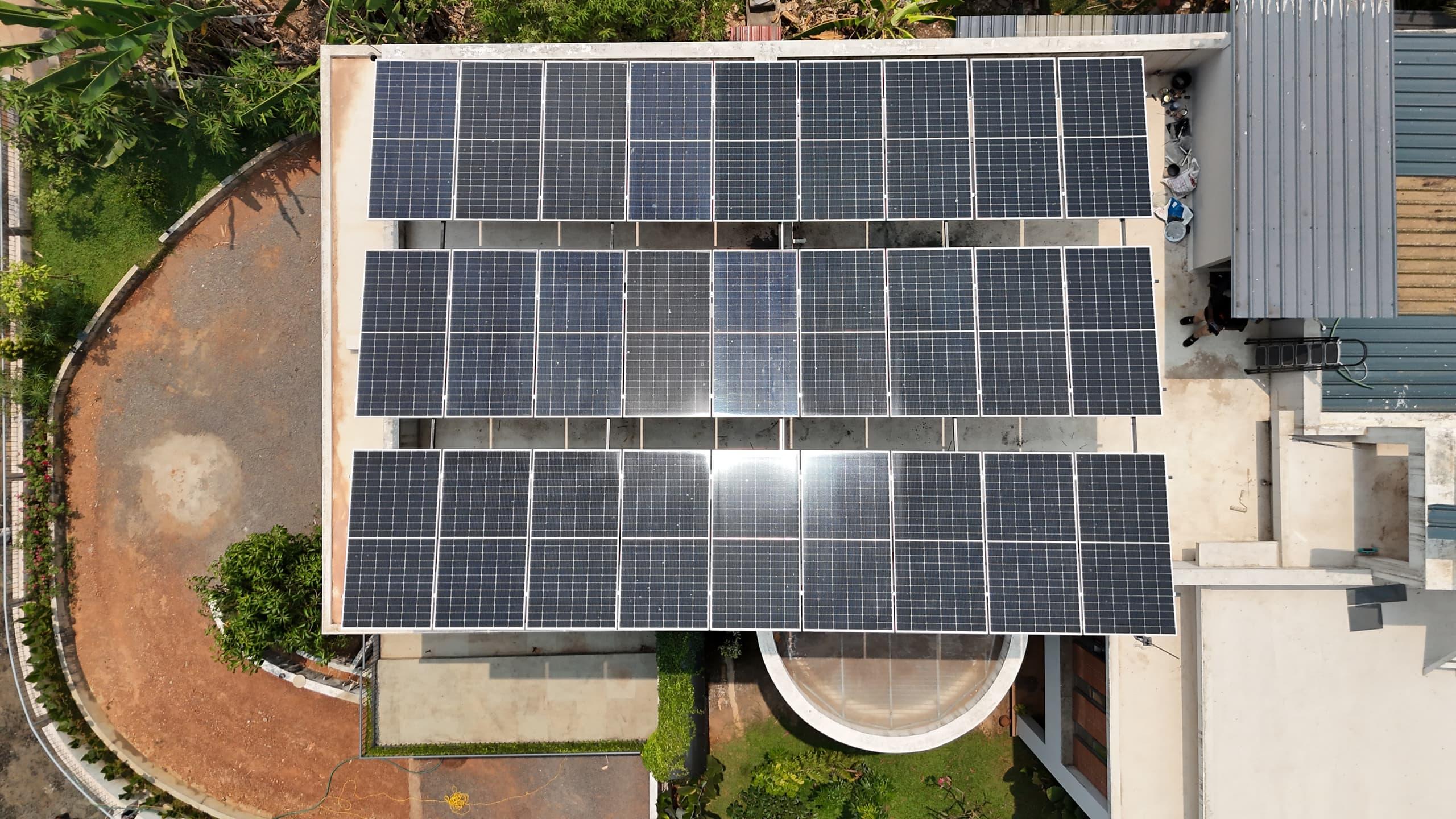
Budget roughly 80 sq ft of shadow-free area per kW. A typical 3 kW home system needs about 250 sq ft. Sloped tile, flat concrete and sheet roofs all work with the right mounting structure.
2. Shading through the day
A coconut tree that shades the roof at 4 pm can cost you far more generation than most people expect. This is why we survey in person and check shadows across the whole day, not from a single photo.
3. Your monthly bill
Solar makes clear financial sense in Kerala once your bill crosses roughly ₹2,000 a month. Below that, payback stretches; above ₹3,000, it is usually compelling.
4. On-grid or off-grid
On-grid systems export excess power to KSEB and have no battery costs, but give no backup in a power cut. Off-grid systems give backup but add battery replacement every 5 to 6 years. The honest answer depends on how often your area loses power.
5. The installer
Ask three questions: are the products MNRE approved, who answers the service phone in year six, and can you speak to customers from several years ago. Any installer worth choosing will welcome all three.
The bonus check: paperwork readiness
Before the survey visit, find your last three KSEB bills and note your consumer number and bimonthly consumption. Those numbers let a surveyor size the system against reality instead of guesses, and they let you catch any quote that ignores them. If your usage swings with seasons, air conditioning in summer for instance, say so: good sizing accounts for the shape of your year, not just its average.
What getting these wrong costs
Every check on this list has a price tag for skipping it. Wrong roof assessment: structures retrofitted after leaks. Skipped shadow study: a string that underperforms every afternoon for 25 years. Oversizing beyond your bill: capital spent on exports credited below retail value. Wrong system type: batteries bought for outages that never come, or missing for outages that come weekly. Wrong installer: everything above, at once, with nobody answering the phone.
The free survey exists to run all five checks with instruments instead of assumptions. Whoever you eventually choose to install, let an engineer stand on your roof before any money moves.
Your roof, next
Want these numbers for your own house?
A free one-hour roof survey by a SEDNA engineer. Honest size, subsidy filed, quote in writing.
- 4.9 on Google
- 2,500+ installations
- MNRE-approved
- Since 2009