

Kerala builds three kinds of roofs, and each asks a different engineering question of a solar installer. The panels are identical in all three cases. The structure underneath is where projects succeed or leak.
Flat concrete: the straightforward case
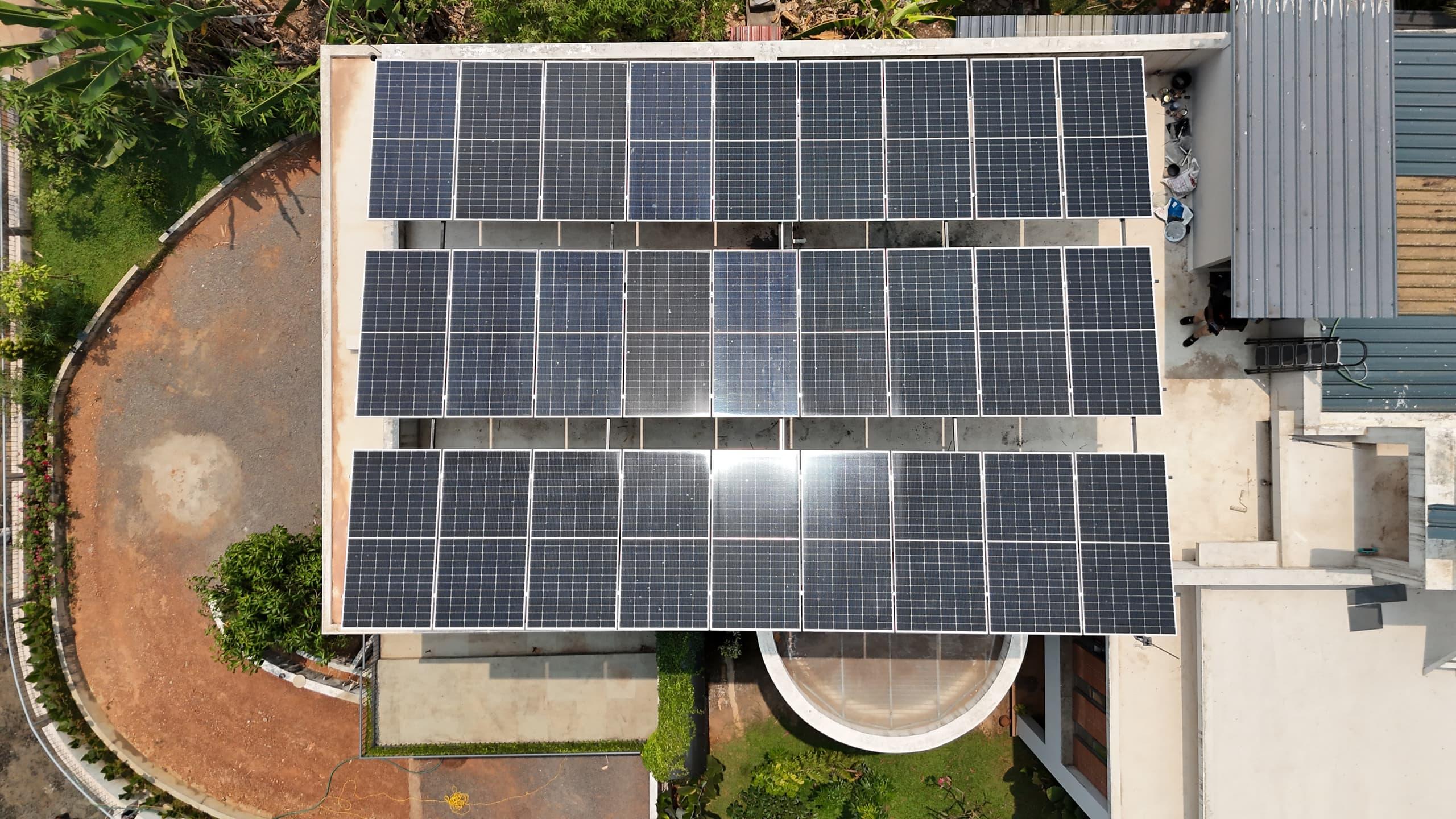
The default and easiest surface. Structures anchor into the slab or sit on ballasted feet, panels tilt to the optimal angle, and elevated designs can reclaim space above tanks and clotheslines. The two engineering musts: chemical or mechanical anchors torqued and sealed so waterproofing survives, and structure height that leaves cleaning access. Done right, a concrete-roof array outlives its own panels.
Metal sheet: fast, light, unforgiving of shortcuts
Factory and newer house roofs in profiled sheet take solar quickly using clamps that grip the profile, often without a single penetration. Weight is rarely an issue; wind is. Sheet roofs concentrate uplift forces, so clamp spacing and purlin engagement must be calculated, not guessed. The shortcut to avoid: self-drilling screws through the sheet crest without proper sealing, which trades ten minutes of saved labour for a decade of drips.
Tile and heritage roofs: the careful case
Traditional tiled and older timber roofs demand the most respect. Load must transfer to rafters rather than tiles, penetrations need purpose-made flashings, and sometimes the honest answer is that the roof should not carry panels at all. That answer is not the end: elevated frames spanning the roof, ground mounts and solar car porches all exist for exactly this case, as our 80-year-old house project shows. A survey that walks the attic before quoting is the tell of an installer who has done tile before.
Whatever the roof, ask one question of any quote: what is the structure specification and its rated wind speed? In coastal Kerala, that line matters more than the panel brand beside it.
Your roof, next
Want these numbers for your own house?
A free one-hour roof survey by a SEDNA engineer. Honest size, subsidy filed, quote in writing.
- 4.9 on Google
- 2,500+ installations
- MNRE-approved
- Since 2009