

Every surveyor on our team can recite these myths from memory, because Kerala's living rooms repeat them weekly. Each one contains a grain of misunderstood truth, which is why they survive. Here is the full list, each against seventeen years of installed evidence.
Myths one to three: weather
'Solar is useless in the monsoon.' Output drops, it does not stop, and annual averages already include the rain, which is why honest quotes use them. Net metering banks the sunny months against the wet ones. 'Kerala is too cloudy for solar generally.' The state's real-world systems average roughly 4 units per kilowatt per day across the year; the counters are on ten thousand inverters for anyone to read. 'Lightning will destroy it.' Only if protection engineering was skipped; earthing, arrestors and surge devices exist precisely for Kerala's storms and are standard in a proper installation.
Myths four to six: the hardware
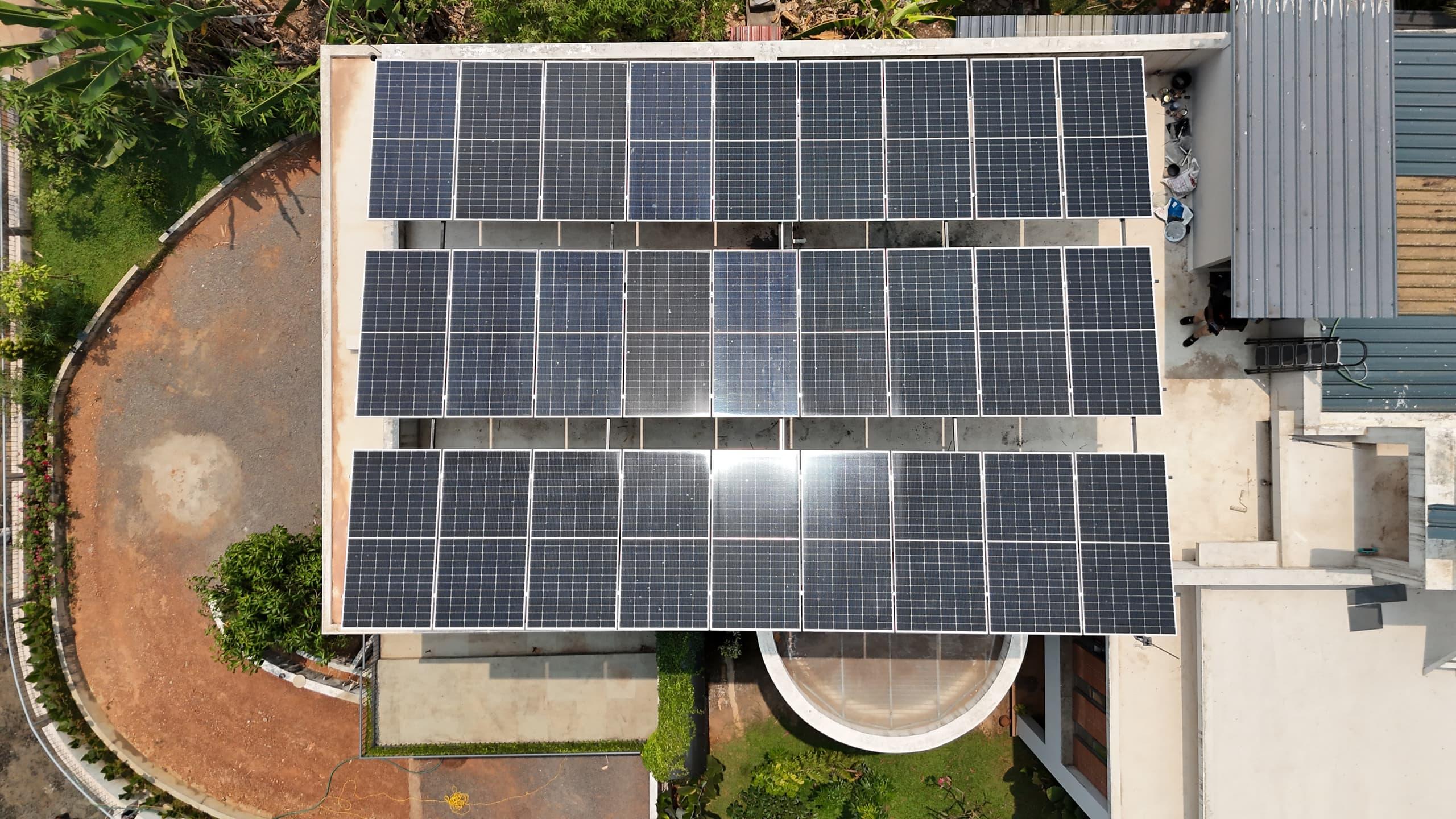
'Panels damage the roof.' Bad mounting damages roofs; engineered mounting protects them, and on concrete roofs the shaded panels actually cool the rooms below. 'Solar needs batteries, and batteries are a headache.' Most Kerala systems are on-grid with no battery at all; batteries are a choice for outage-prone areas, not a requirement. 'Maintenance is constant and expensive.' The care schedule is cleaning plus one annual professional check; our published service records of four and eight year old systems show what that little attention preserves.
Myths seven to nine: the money
'The subsidy is a trick and never arrives.' It arrives to your own bank account, typically 30 to 90 days after commissioning, when the paperwork is filed correctly with DCR panels and a registered vendor; the trick versions are installers pocketing it, which our scam guide dissects. 'Payback takes fifteen years.' Current pricing, the ₹78,000 subsidy and Kerala's tariff slabs put typical home paybacks at 3 to 5 years. 'Better to wait, prices keep falling.' Panel prices have flattened while tariffs rise and subsidy schemes have end dates; our cost-of-waiting article does the arithmetic, and waiting loses it.
Every myth on this list dissolves the same way: with a measured survey and your own bill's numbers. That is one hour, free, and it replaces folklore with figures for your exact roof.
Your roof, next
Want these numbers for your own house?
A free one-hour roof survey by a SEDNA engineer. Honest size, subsidy filed, quote in writing.
- 4.9 on Google
- 2,500+ installations
- MNRE-approved
- Since 2009