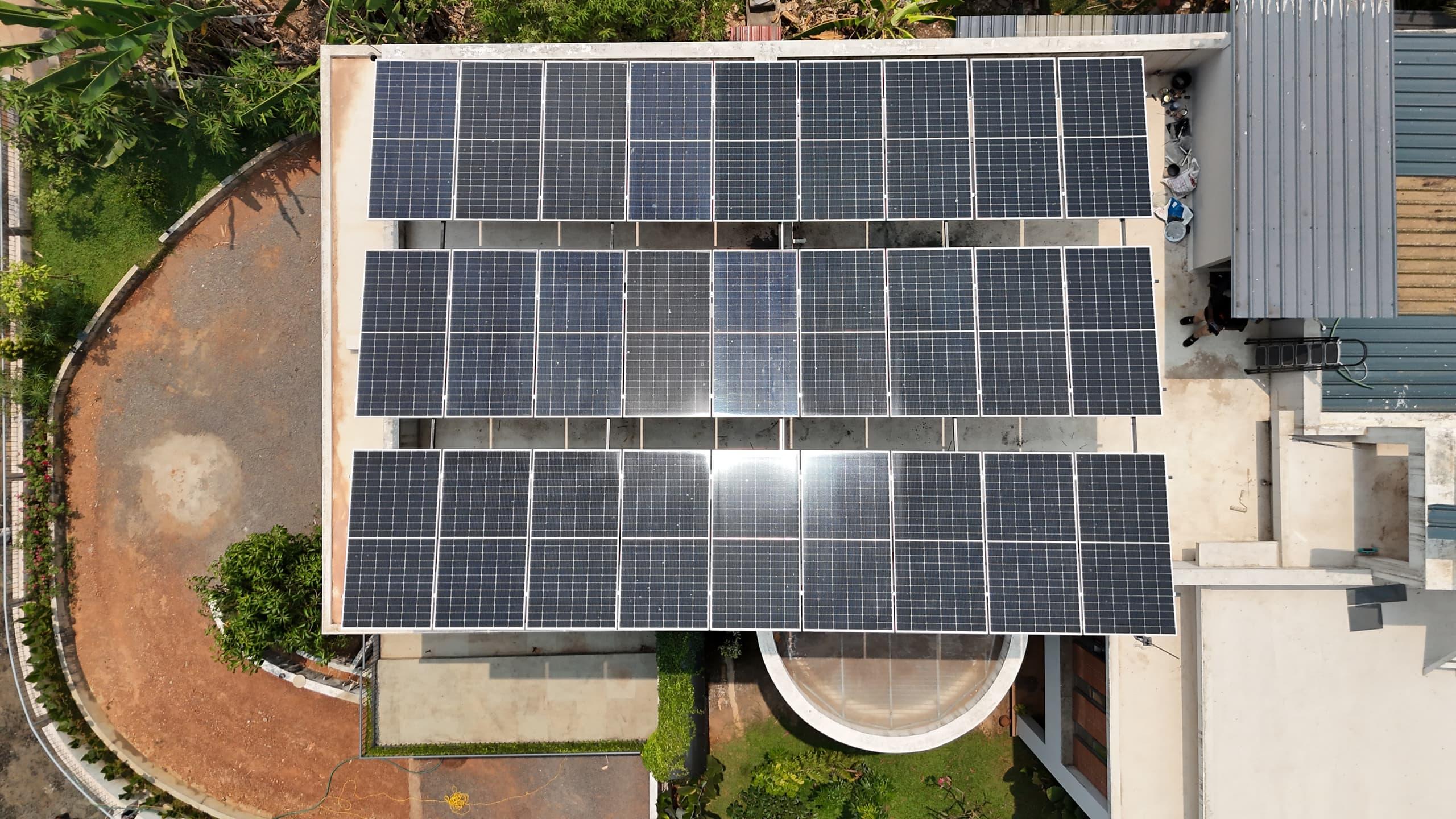


Inside a solar panel, dozens of cells work in series like a chain. When one cell is blocked, by hard shadow, a leaf, thick droppings or internal damage, the current the other cells push can turn that blocked cell into a resistor. It heats. Left alone, it can discolour, crack the glass, or burn through the backsheet. That is a hot spot, and it is the most common serious panel fault we see in the field.
What causes them in Kerala
Partial hard shadows are the biggest cause: a TV antenna, a cable, the edge of a water tank, a branch that grew since installation. Persistent soiling in one patch does the same. Occasionally the cause is internal, a manufacturing defect or a micro-crack from careless handling, which is one more reason panel brand and installation care matter.
Detection and prevention
Hot spots announce themselves to a thermal check long before they announce themselves to your eyes. During service visits we scan for temperature anomalies and check bypass diodes, the small components inside the junction box whose whole job is routing current around a blocked cell. Prevention is mostly design: shadow-mapped layout at survey, panels placed where nothing hard-shades them, and cleaning that does not let one patch stay dirty for months.
If a section of your array reads consistently lower in your inverter app, or you can see any discolouration on a panel, that is a service call today rather than a panel replacement next year.
Your roof, next
Want these numbers for your own house?
A free one-hour roof survey by a SEDNA engineer. Honest size, subsidy filed, quote in writing.
- 4.9 on Google
- 2,500+ installations
- MNRE-approved
- Since 2009