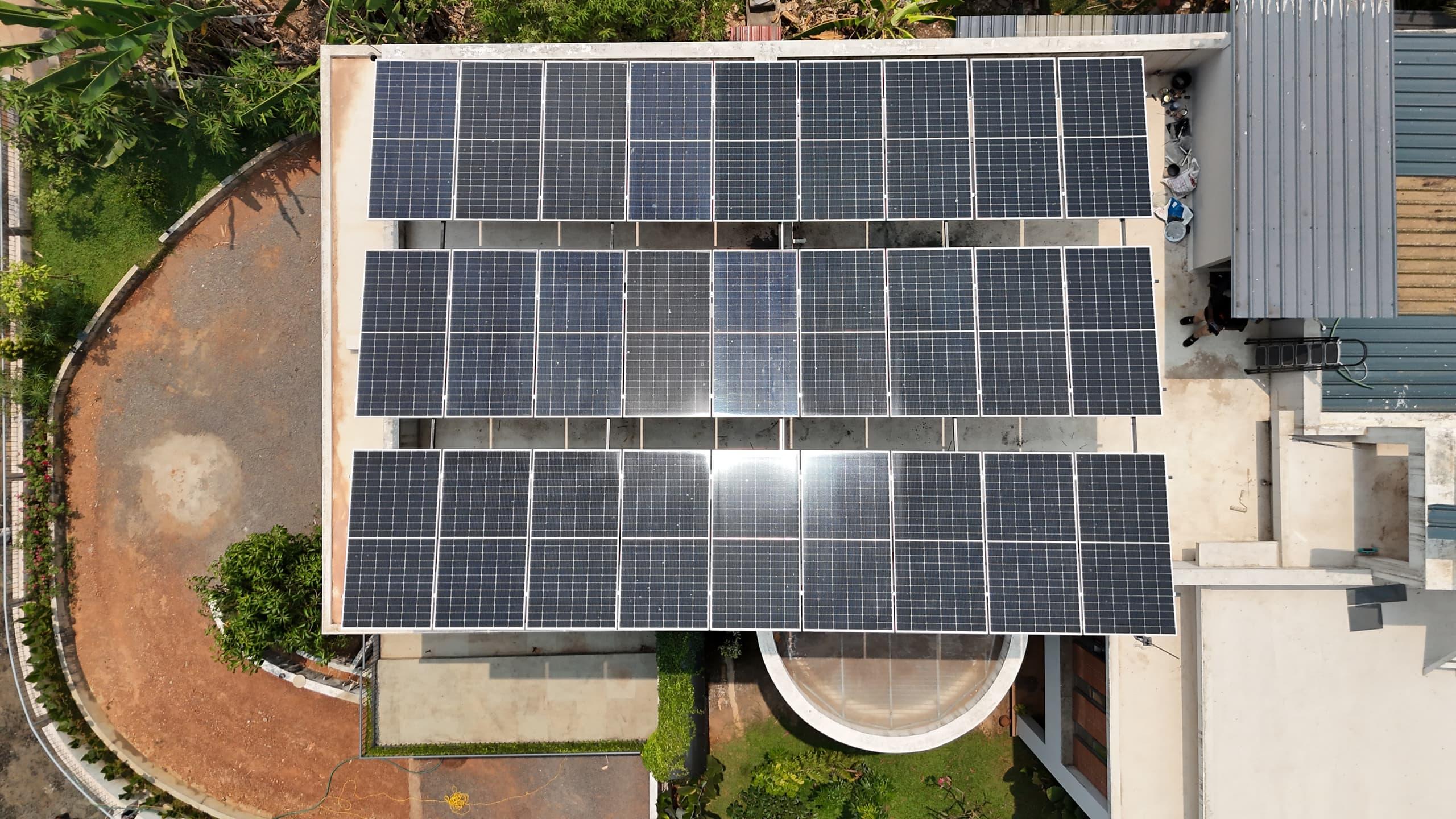


Brochures promise generation figures. Inverter counters do not lie about them. During a routine service visit to a 5 kW on-grid system we installed four years ago, the lifetime generation read 23,000 units. This article is the honest arithmetic of that number.
What 23,000 units means
23,000 units over four years is roughly 15.7 units a day on average, through four monsoons, panel dust cycles and everything else real life adds. At domestic tariff rates that generation represents well over two lakh rupees of electricity the family did not buy from the grid.
Note what the average includes: monsoon months where daily output halves, and peak months of 20 plus units a day. Annual averages are the only honest way to talk about solar output, which is why we quote them instead of sunny-day numbers.
What four years does to a system
Quality panels degrade slowly, typically under one percent a year, and this system's readings sit within that expectation. The service visit itself covered panel cleaning, connection torque checks, earthing verification and inverter health. An hour of maintenance a year is what keeps a 25-year asset on its curve.
The full service visit is in the video above. When a company shows you its old systems and their counters, you are looking at its real brochure.
Your roof, next
Want these numbers for your own house?
A free one-hour roof survey by a SEDNA engineer. Honest size, subsidy filed, quote in writing.
- 4.9 on Google
- 2,500+ installations
- MNRE-approved
- Since 2009