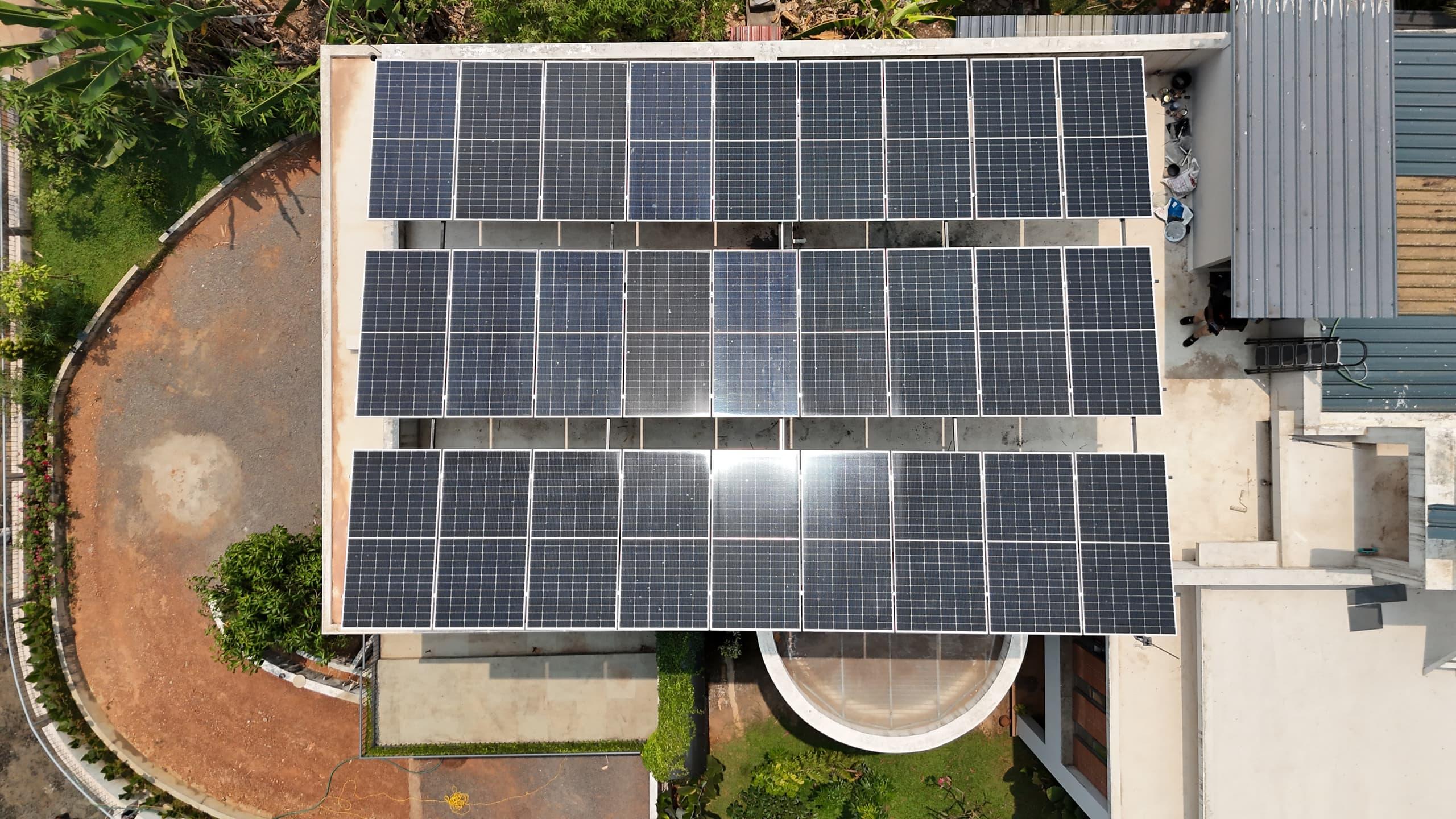


In August 2018 Kerala lived through its worst floods in a century. Entire districts lost grid power for days. In the middle of it, one of our customers' homes stayed lit: phones charged, news running, a refrigerator protecting food, because the roof was still making electricity and a battery was holding it.
Why this system kept working
A plain on-grid system would have shut down with the grid, as all grid-tied inverters must for lineman safety. This home had battery backup, so when the grid disappeared the system switched over and ran the essential loads on solar and storage. Daylight recharged the battery; evenings ran on what the day had banked.
What 2018 taught us about sizing backup
Nobody sizes a home system for a flood. But 2018 changed how we ask the backup question in surveys: not 'do you want a battery' but 'which loads must never die at your house'. For most families the honest answer is small: lights, fans, phone charging, the router, sometimes a refrigerator. A battery sized for exactly that costs a fraction of whole-home backup and lasts days instead of hours in an emergency.
The full story is in the video above, told by the people who lived it. It remains the best answer we have ever had to 'why would I pay extra for hybrid?'
Your roof, next
Want these numbers for your own house?
A free one-hour roof survey by a SEDNA engineer. Honest size, subsidy filed, quote in writing.
- 4.9 on Google
- 2,500+ installations
- MNRE-approved
- Since 2009