

TOD, time of day, is a billing method, not a meter type. It divides the 24 hours into three zones and charges a different rate in each. Every electronic meter KSEB has installed in recent years records consumption by zone whether or not you are billed that way; the split is there in the meter's memory. Whether it appears as separate rates on your bill depends on how much you use.
The three zones
T1 is normal: six in the morning to six in the evening. T2 is peak: six in the evening to ten at night, when every house in Kerala switches on its lights, fans, televisions and cookers at once and the grid is under most strain. T3 is off-peak: ten at night to six in the morning. The normal rate applies in T1, a higher rate in T2, and a lower rate in T3. Industry has been billed this way for years; the idea is to reward customers who move consumption away from the evening peak.
Who is billed by it
For domestic consumers, TOD billing applies above 500 units a month, which on a two-month bill means consumption above 1,000 units. Below that you pay the ordinary slab tariff and the zone split on the meter is simply not used. Above it, the bill lists the import in each zone separately, applies that zone's rate, and adds the three together. Thresholds and rates are set in KSERC's tariff orders and are revised from time to time, so check the current order rather than an old bill.
Households that cross the line are the ones with several air conditioners, an electric vehicle charging at night, or a home office running all day. Which is to say, the households most likely to be reading about solar.
Why it matters once you have solar
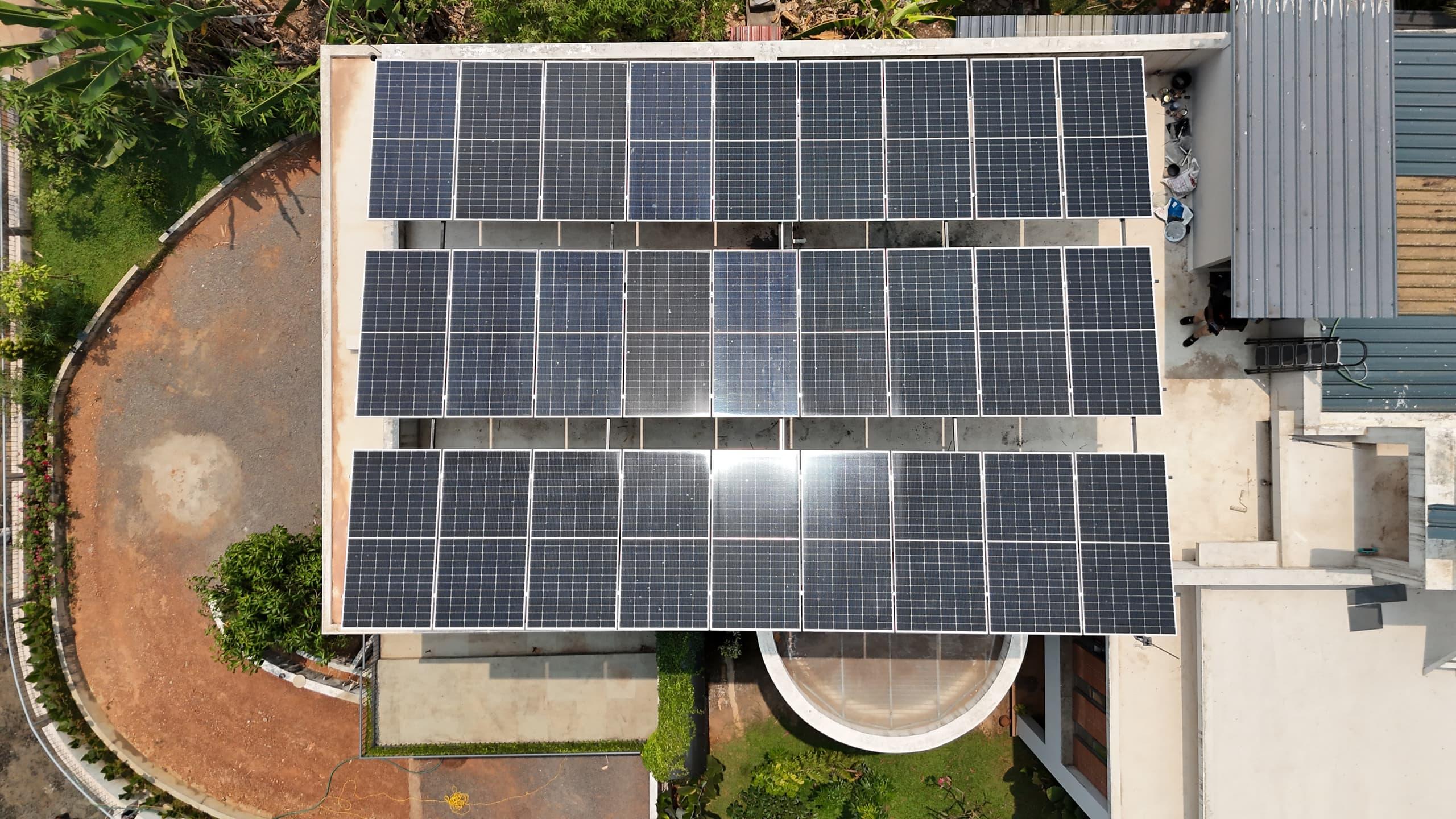
A rooftop plant generates entirely inside T1. Between six in the evening and ten at night, the peak zone, your roof produces nothing and the house draws from the grid at the highest rate. So for a solar home on TOD billing the rule is simple: push everything movable into daylight. Run the washing machine, the pump, the water heater backup and, above all, EV charging while the sun is up, when the house is consuming its own generation and the grid is not billing at all. Save the evening for the loads that cannot move.
For an on-grid home, the units you export in T1 are banked and drawn back in T2, and the current net-metering arrangement for domestic consumers nets those units off. The regulator has for some years been moving the state towards settlement that recognises when power was produced and when it was used, which is one more reason the evening peak is the number to watch. If your consumption is well above 500 units, ask your installer to look at the T2 line on your bill before sizing the system; a hybrid with a battery that discharges through the evening peak is designed for precisely that line.
Reading it on the bill
Look for the import figures split by T1, T2 and T3 on the second page. If they are there, you are on TOD. Compare T2 with T1: a household whose evening zone is a third or more of its total is paying the peak rate on a large share of its consumption, and has the most to gain from shifting load, from storage, or from both.
Your roof, next
Want these numbers for your own house?
A free one-hour roof survey by a SEDNA engineer. Honest size, subsidy filed, quote in writing.
- 4.9 on Google
- 2,500+ installations
- MNRE-approved
- Since 2009