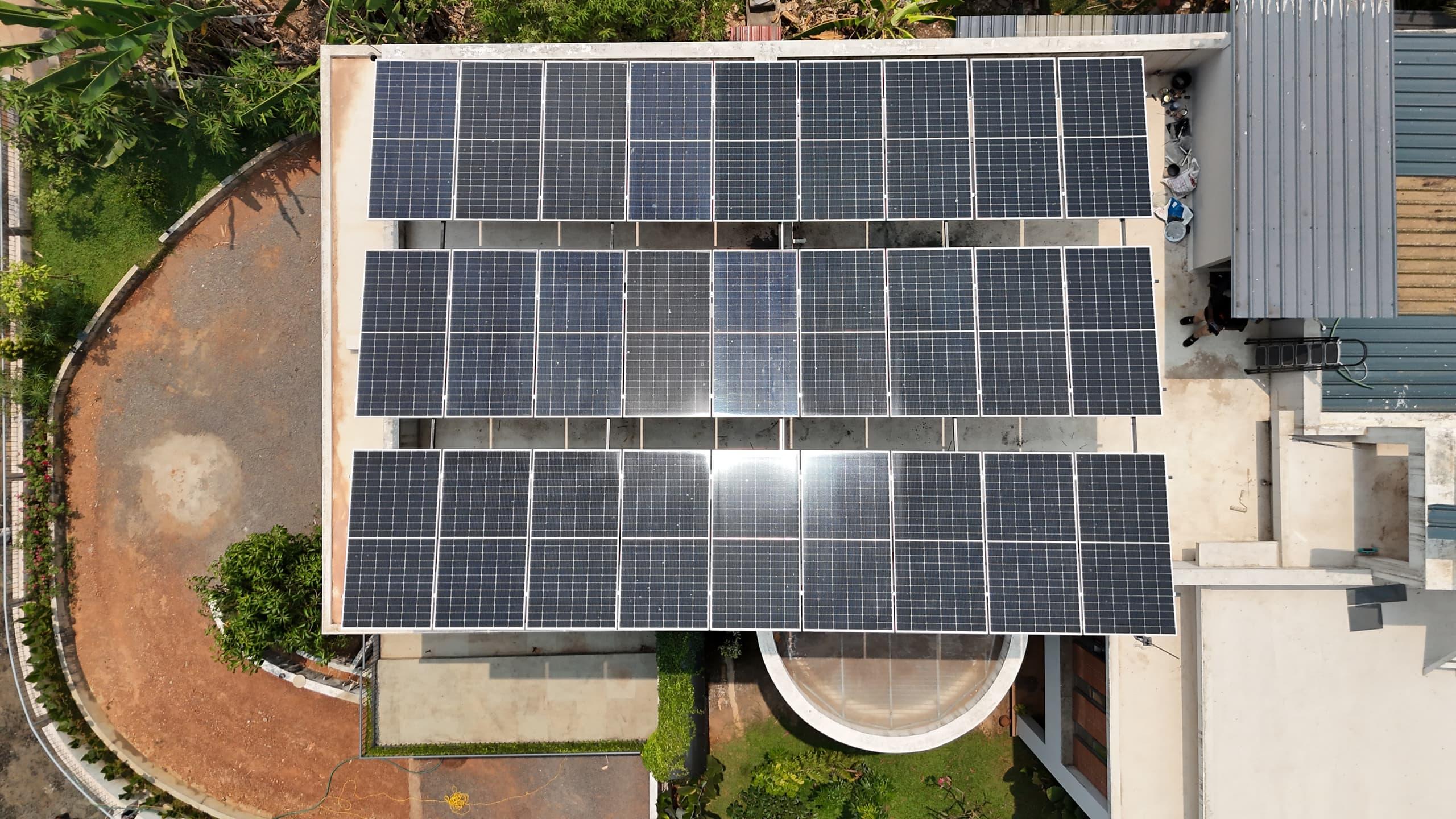


After net metering is commissioned, KSEB replaces your old meter with a bidirectional one. It records two directions separately: the units you draw from the grid (import) and the units your solar system sends out (export).
The three numbers that matter
Import: what you consumed from KSEB when the sun was not enough. Export: what your roof sent to the grid. Generation: what your inverter produced in total, which you can read on the inverter display or its monitoring app.
Your bill is settled on import minus export. If you exported more than you imported, the excess carries forward as credit to the next billing cycle.
What to check every month
Open your inverter app once a month and compare generation against the same month last year. A healthy Kerala system produces roughly 4 units per kW per day on average across the year, lower in monsoon months and higher from January to May. A sudden drop usually just means the panels need cleaning; a sustained drop is when you call us.
Your roof, next
Want these numbers for your own house?
A free one-hour roof survey by a SEDNA engineer. Honest size, subsidy filed, quote in writing.
- 4.9 on Google
- 2,500+ installations
- MNRE-approved
- Since 2009