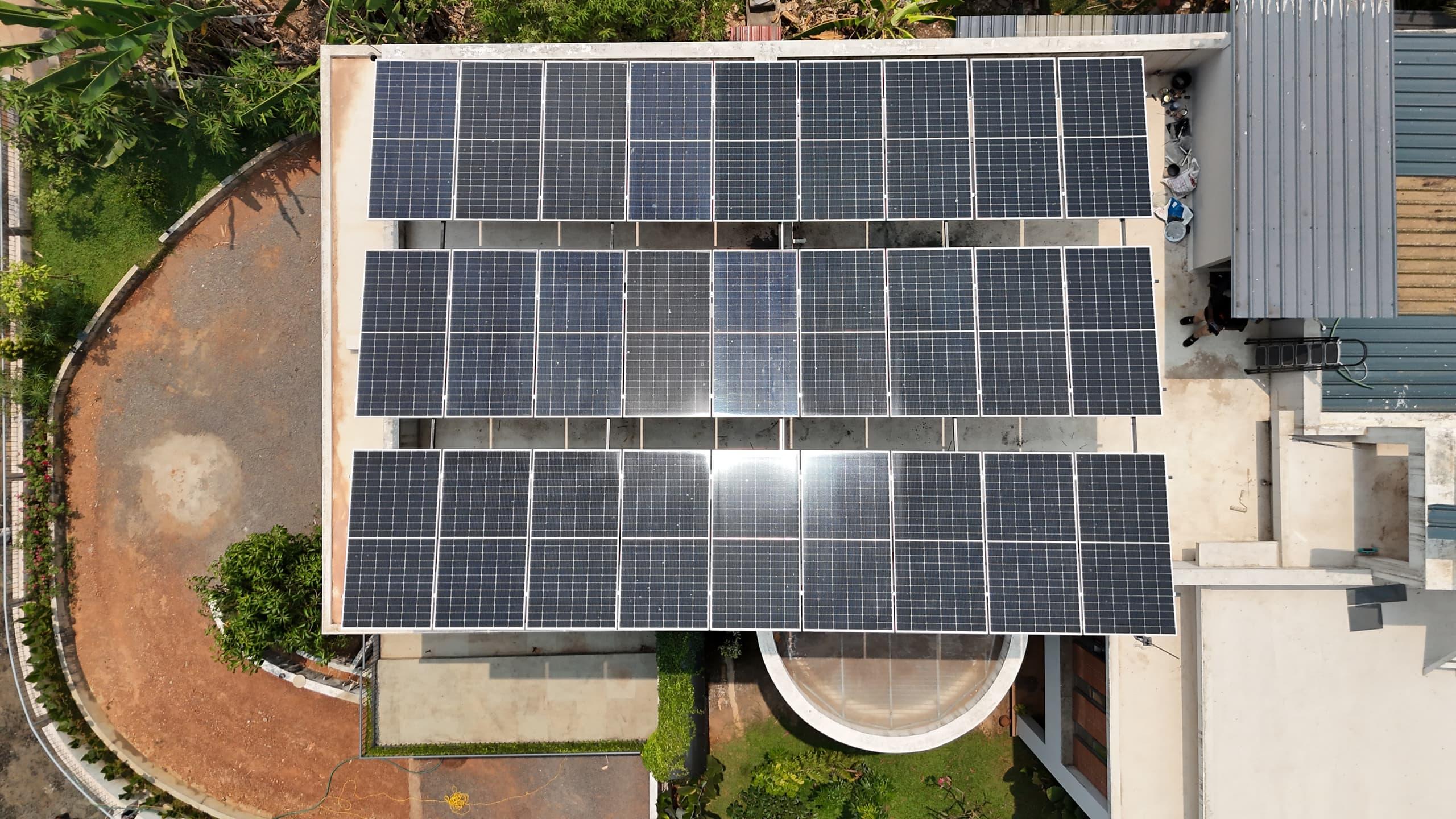


Under PM Surya Ghar: Muft Bijli Yojana, residential rooftop solar gets a central subsidy of ₹30,000 per kW for the first 2 kW and ₹18,000 for the third, capped at ₹78,000 for systems of 3 kW and above. For most Kerala homes with bills over ₹2,500, the 3 kW slab is the one that matters.
The route the money takes
The application goes through the national portal, linked to your KSEB consumer number. Your installer registers the project, KSEB approves feasibility, the system is installed and inspected, net metering is commissioned, and the subsidy is then transferred directly to your bank account. Across our recent installations it has typically landed within 30 to 90 days of commissioning.
The one mistake to avoid
Never accept an offer where the installer 'adjusts' the subsidy in the quote and takes the transfer themselves. The scheme pays the homeowner, not the company. If a quote assumes the subsidy goes anywhere other than your own bank account, walk away.
SEDNA files the paperwork with your application as part of every installation. You can verify any claim in this article against the official pmsuryaghar.gov.in portal.
The slabs, spelled out
One kilowatt earns ₹30,000. Two kilowatts earn ₹60,000. Three kilowatts and above earn the capped ₹78,000: a 5 kW and a 10 kW system receive the same subsidy as a 3 kW. The design nudges every household toward at least 3 kW, and for most families with bills above ₹2,500 that nudge points the right way anyway. Housing societies have a separate track for common-area systems at ₹18,000 per kW with its own caps.
Who is eligible
A residential KSEB connection in your own name, a roof you have rights to, DCR panels from the ALMM list, and installation by a DISCOM-registered vendor. Commercial connections are outside this scheme, though businesses get their own arithmetic through accelerated depreciation, covered in our business solar guide.
The three mistakes that delay or kill subsidies
Installing before feasibility approval arrives, which can void eligibility entirely. Using non-DCR or unlisted panels, which fails inspection. And letting the file sit unchased between stages, which turns a 60-day journey into a six-month one. All three are installer failures, not customer failures, which is why an installer's paperwork record belongs in your comparison alongside their price.
For the complete stage-by-stage process, from portal registration to the credit hitting your account, read our full PM Surya Ghar application walkthrough.
Your roof, next
Want these numbers for your own house?
A free one-hour roof survey by a SEDNA engineer. Honest size, subsidy filed, quote in writing.
- 4.9 on Google
- 2,500+ installations
- MNRE-approved
- Since 2009