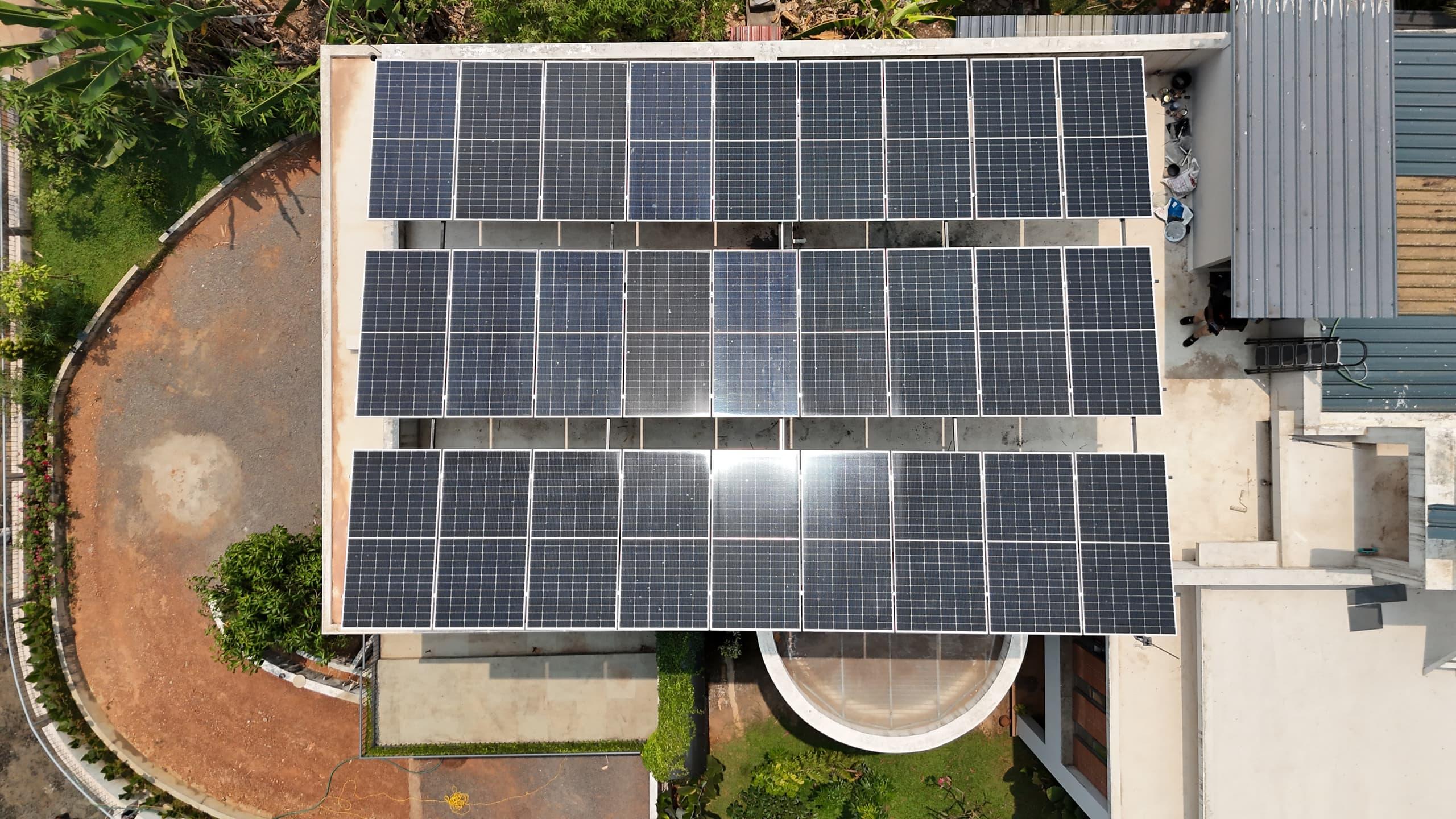


Almost every rooftop system in Kerala uses a string inverter: panels wired in series feeding one box on the wall. Micro inverters flip the architecture, mounting a small inverter behind each panel so every module works independently. We test and deploy both, and the honest answer about which is better is: it depends on the roof.
Where micro inverters shine
On a string, the weakest panel drags its whole string down, which is expensive on roofs with partial shade moving across the day. Micros isolate the problem: a shaded panel loses its own output and nothing else. You also get panel-level monitoring, seeing each module's health individually, and system expansion becomes modular, adding panels one at a time. Complex multi-direction roofs, chronic partial shade, or a fascination with per-panel data are their natural home.
Where string inverters stay the right call
Cost per watt is meaningfully lower, service is centralised in one accessible box instead of distributed across a hot roof, and on an unshaded south-facing roof, the performance difference nearly vanishes. That describes most Kerala homes we survey, which is why the string inverter remains our default recommendation, with shadow mapping making the case for micros where the roof genuinely needs them.
The unboxing and test in the video shows the hardware up close. As always, the roof decides, not the catalogue.
Your roof, next
Want these numbers for your own house?
A free one-hour roof survey by a SEDNA engineer. Honest size, subsidy filed, quote in writing.
- 4.9 on Google
- 2,500+ installations
- MNRE-approved
- Since 2009