

In the middle of 2024 the headlines asked whether KSEB was cheating people who had put solar on their roofs. In 2025 the same question came back louder, when the regulator published a draft that would have changed how prosumers are billed, and installers and owners marched in protest. We filmed the first version of this explanation on an elevated 3 kW installation at Chettikad near Thumpoly in Alappuzha, and it has needed updating twice since. Here is the whole story in one place, with the current position at the end.
What net metering does
Kerala's domestic rooftop consumers are on net metering. Think of it as barter. The bidirectional meter at your house counts units you send to KSEB and units you take back. At billing time the two are netted off. If you exported 500 units and imported 500, your energy charge is zero; you still pay the fixed charge, the meter rent and the duty, but no energy charge. Surplus units are banked and carried forward, which the article on the March settlement covers.
For an owner this is the best arrangement there is, because every unit you send out is worth exactly one unit back, at whatever the retail tariff happens to be. As the tariff rises, so does the value of your export.
What gross metering would do
Several states use gross metering for some consumer classes, and this is what the 2024 debate was about. Under gross metering the two flows are priced separately. Everything your roof generates is bought by the utility at a generation tariff, typically a few rupees a unit. Everything your house consumes is billed at the retail tariff, which for a household of any size is several times higher. You pay the difference.
Take the same 500 units. Under gross metering, 500 units consumed at a retail rate of, say, eight rupees is ₹4,000 on the bill; 500 units generated and sold at three rupees is ₹1,500 credited; you pay ₹2,500 where under net metering you paid nothing. For a home that invested in solar to eliminate the energy charge, gross metering is a real loss, and that is why the question of whether Kerala would move to it caused such anxiety.
Who actually decides
Not KSEB. The billing arrangement for renewable energy consumers is set by the Kerala State Electricity Regulatory Commission, KSERC, through regulations and tariff orders after public hearings. KSEB can propose, and it does, but the commission decides. During the 2024 hearings the commission made one point clear that still stands: consumers already connected under net metering are not moved off it for the term of their agreement, so a plant installed under net metering keeps that arrangement.
The duty on self-generation
One change did land in 2024, and it is the line that made many owners feel cheated. Kerala levies an electricity duty on energy generated by self-generating units, and it applies to rooftop solar. At the time of filming it had been raised from about 12 paise to 15 paise per unit generated. On a 3 kW plant producing 12 to 15 units a day that is a few rupees a day, not a threat to the economics, but it arrived without much explanation and it does mean a solar home never quite reaches a zero bill. It appears as a separate line; check the current rate on your own bill, since it can be revised.
2025: the draft, the protest, and what was finally notified
In 2025 KSERC published draft renewable energy regulations that alarmed the sector: among other things they proposed limiting net metering to small systems and moving larger ones to net billing, which prices export and import separately in the way gross metering does. In July 2025 installers' associations from all fourteen districts held a protest march, and the commission chairman extended the deadline for written objections after meeting them. We filmed it.
The regulations notified in November 2025, with billing under them from January 2026, kept net metering for domestic consumers up to 20 kW, kept banking, and did not impose a grid support charge on systems of 10 kW and below. The 3 kW cap in the draft did not survive. For the typical Kerala home, which installs between 3 and 10 kW, the arrangement in 2026 is the same net metering that the 2024 headlines feared would disappear.
So, is anyone being cheated?
By the billing arrangement, no. Net metering is intact for homes, and every unit exported still comes back one for one. The duty is real but small. Where owners do lose money is in the things this blog spends most of its time on: systems that stop and nobody notices, bills read wrong, banked units misunderstood, and installers who vanish. Those are fixable. The regulatory question, for now, is settled in the owner's favour.
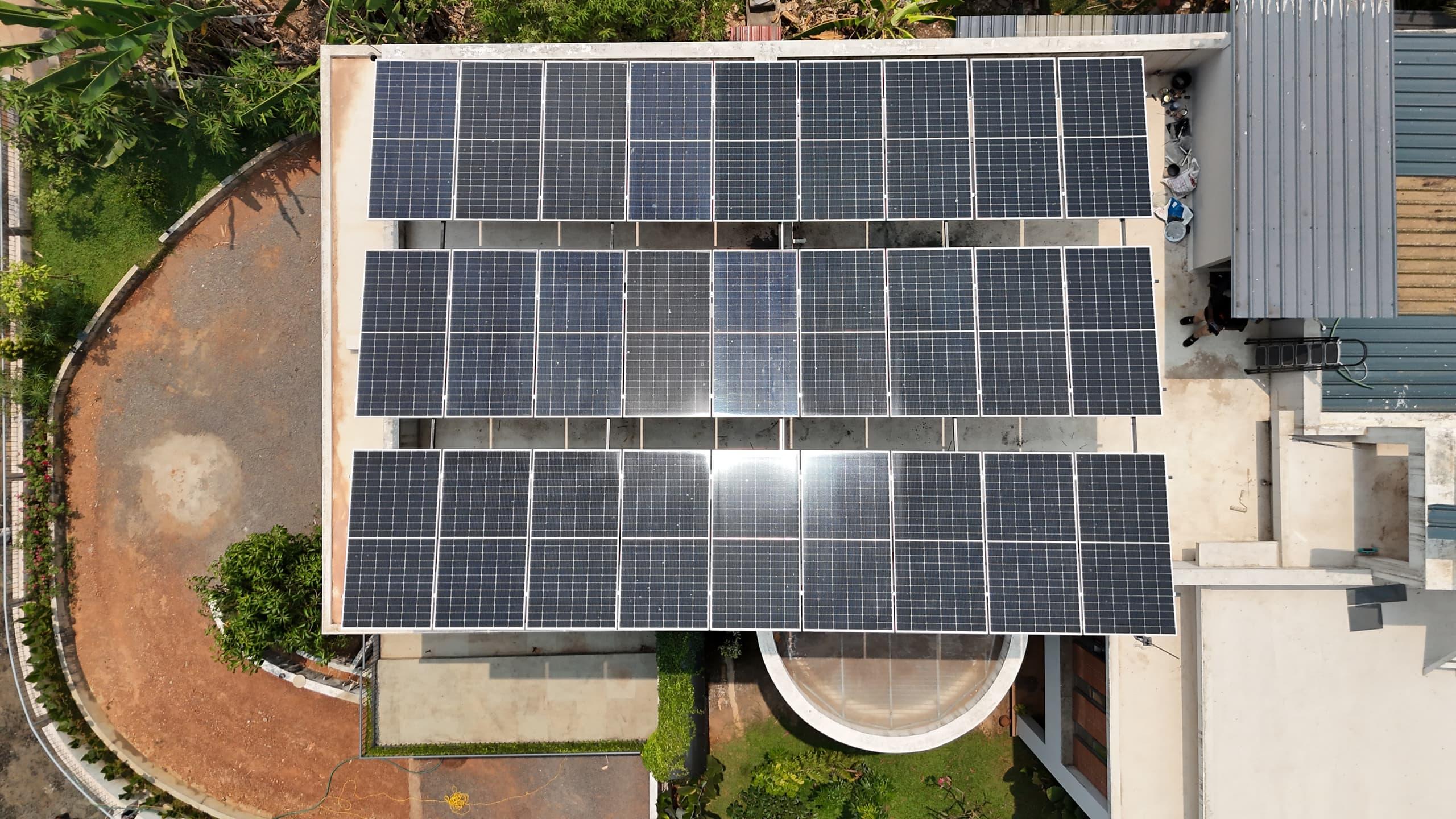
The 3 kW plant we filmed on, for the record: six Adani 540 W bifacial DCR panels on a structure lifted about four metres, a kilometre from the sea, cross-braced against the wind, with the roof beneath painted white by the owner to bounce light onto the rear faces. It had been recording around 18 units a day over the previous two months. That is what a 3 kW system can do when it is designed for its site, and it is worth far more to an owner than any change the regulator has made.
Your roof, next
Want these numbers for your own house?
A free one-hour roof survey by a SEDNA engineer. Honest size, subsidy filed, quote in writing.
- 4.9 on Google
- 2,500+ installations
- MNRE-approved
- Since 2009