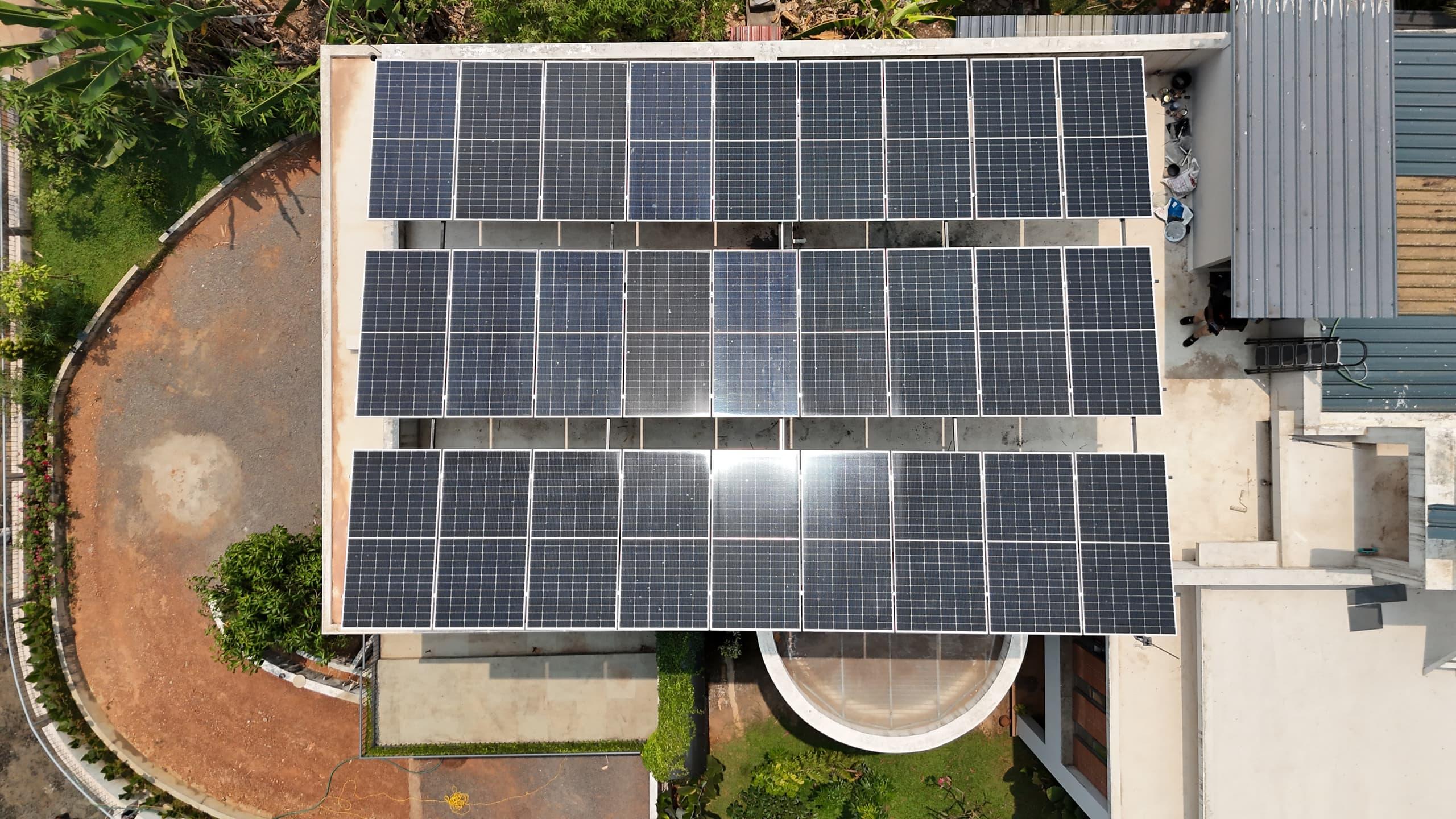


The glamour of a solar system is on the roof. Its survival is in the boring boxes on the wall and the copper in the ground. Kerala's pre-monsoon and monsoon thunderstorms are among the most electrically active weather in India, and every year they retire solar equipment whose owners saved a few thousand rupees on protection. This is the part of the quotation to read twice.
The three layers
Earthing: separate, measured earth pits for the array structure, the inverter and the lightning arrestor, giving fault currents and strikes a low-resistance path to ground instead of a path through your equipment. Lightning arrestor: a terminal positioned to intercept strikes above the array and deliver them to earth. Surge protection devices: the last line, mounted in the DC and AC distribution boxes, absorbing the voltage spikes that ride in on cables from nearby strikes and grid switching. All three layers appear in every SEDNA installation, and the distribution boxes themselves, as in the site video above, sometimes earn added physical protection where the location demands it.
How owners can check their own system
Open the DC and AC distribution boxes with the system isolated, or simply photograph them for a professional: SPDs are visible modules, usually with a status window that changes colour when the device has sacrificed itself. Sacrificed SPDs after a storm season are proof the system worked, and they must be replaced, which is precisely the kind of item an annual maintenance visit catches. If your installation has no SPDs to inspect, that absence is the finding, and it is worth fixing before the next season regardless of who installed the system.
Your roof, next
Want these numbers for your own house?
A free one-hour roof survey by a SEDNA engineer. Honest size, subsidy filed, quote in writing.
- 4.9 on Google
- 2,500+ installations
- MNRE-approved
- Since 2009