

Two panels can look identical, carry similar specifications, and be separated by one acronym that decides your subsidy eligibility. DCR versus non-DCR is the most consequential distinction in Indian residential solar, and most buyers hear about it for the first time inside a sales pitch.
What DCR means
DCR stands for Domestic Content Requirement: both the solar cells and the module must be manufactured in India. PM Surya Ghar subsidy is available only for systems built with DCR panels from the ALMM list. If the subsidy is part of your plan, DCR is not a choice, it is a requirement, and any quote claiming otherwise is the scam-alert kind.
When non-DCR is the smarter buy
Non-DCR panels, often imported, include some of the most advanced technology in the market, like the high-efficiency TOPCon modules we install on larger projects. They typically cost less per watt and yield more per panel. For commercial plants, systems above the subsidy slabs, or homeowners who have done the arithmetic and found the subsidy less valuable than the better hardware, non-DCR can win.
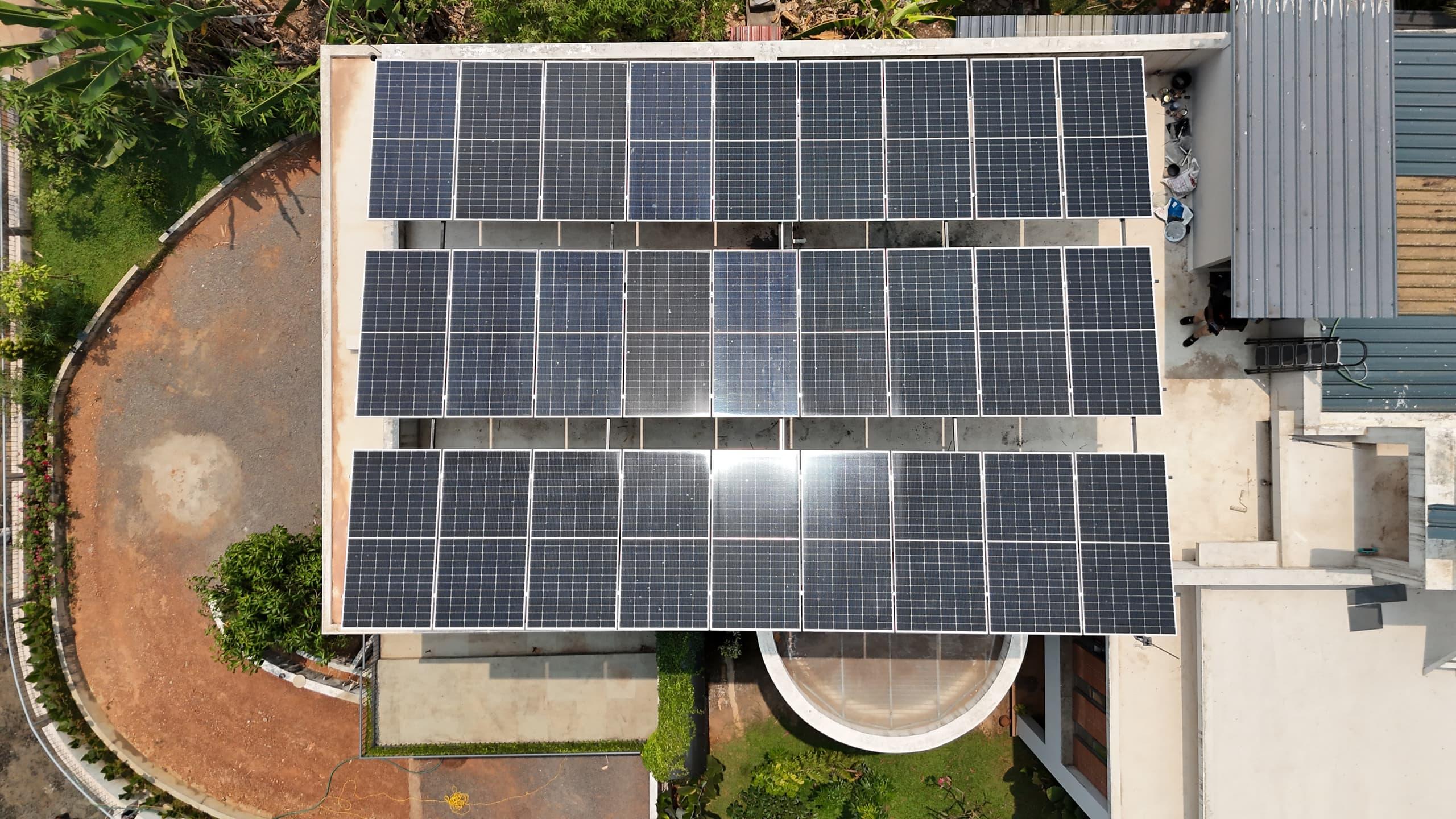
The 12 kW Vikram TOPCon installation in the video above is a non-DCR project in Cherthala, chosen deliberately for exactly these reasons. The right answer depends on your project's size and subsidy math, which is a survey conversation, not a slogan.
How to verify
Ask for the exact panel model and check it against MNRE's ALMM list, which is public. A DCR claim that cannot be verified on the list is not a DCR panel, whatever the invoice says.
Your roof, next
Want these numbers for your own house?
A free one-hour roof survey by a SEDNA engineer. Honest size, subsidy filed, quote in writing.
- 4.9 on Google
- 2,500+ installations
- MNRE-approved
- Since 2009